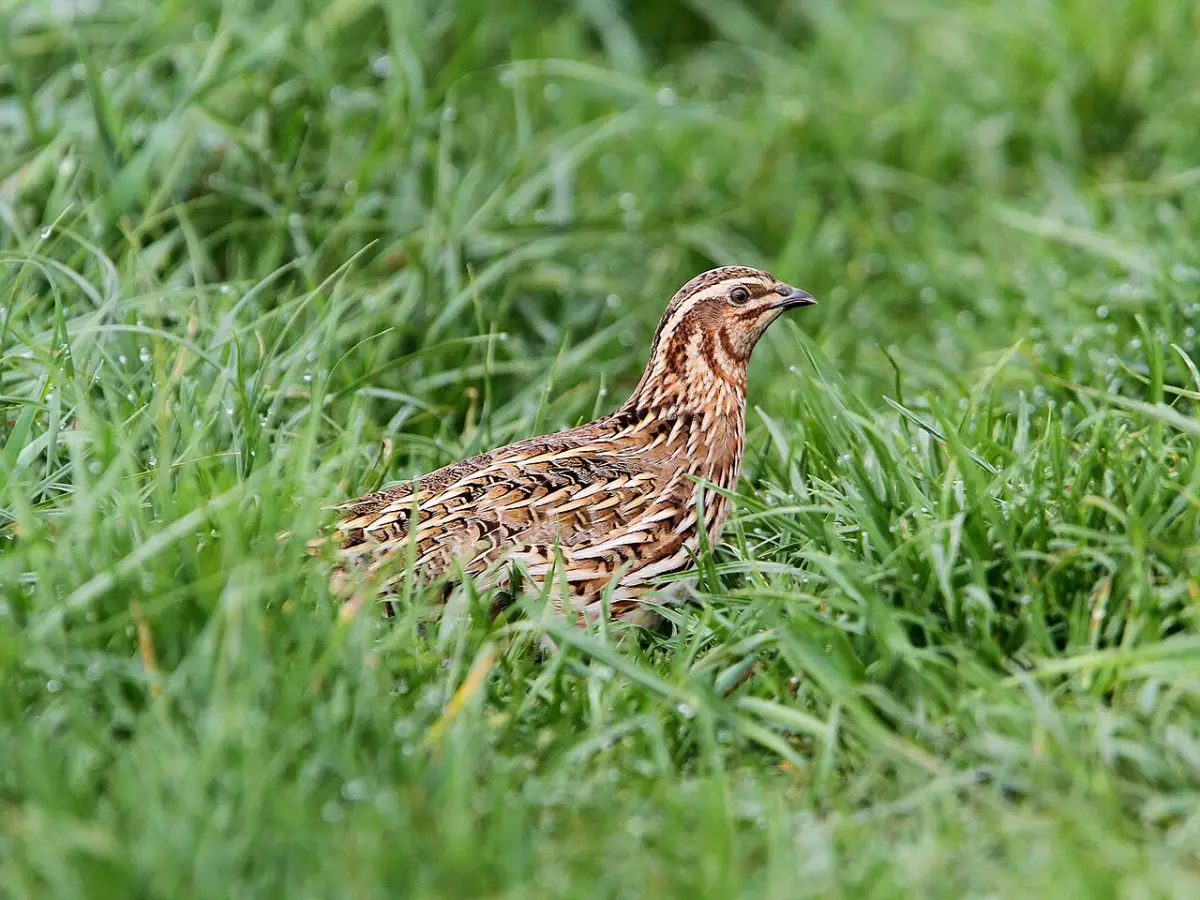
Quail housing has one rule that surprises everyone. Your cage should be either shorter than 12 inches or taller than 6 feet. Never anything in between.
Here is why. Coturnix quail do not really fly, they detonate. When something startles them they flush straight up at full power. In a cage that is 2 or 3 feet tall, a flushing quail has just enough runway to reach neck-breaking speed before meeting the ceiling. In a low cage they cannot accelerate. In a walk-in aviary they run out of steam before the top. The middle heights are the danger zone, and I learned this the expensive way with my favorite hen.
Floor space: the one square foot rule
One square foot per adult bird on wire, minimum. More is always better. Crowding shows up first as feather picking and bickering, long before anything worse.
| Covey size | Minimum floor space | Real-world setup |
|---|---|---|
| 4 to 6 hens | 4 to 6 sq ft | Large rabbit hutch, 36 x 24 inches |
| 8 to 10 birds | 8 to 10 sq ft | 48 x 30 inch purpose-built cage |
| 12 or more | 12+ sq ft | Stacked cage system or ground pen |
| Breeding group, 1 male + 4 hens | 5 to 6 sq ft | One tier of a stacked system |
Ground pens need roomier math. Figure 2 square feet per bird, because they use the space differently. Dust bathing, foraging, and sprinting laps for reasons known only to quail.
The height rule, one more time
- 8 to 12 inches: the sweet spot. Birds can stand tall and stretch, but cannot build flush speed.
- 12 inches to 6 feet: the injury zone. If you must use a taller enclosure, stretch soft netting about 10 inches above the floor as a cushion ceiling. It works. I ran a converted dog kennel this way for a summer.
- Over 6 feet: safe again. A walk-in aviary is honestly the most fun way to keep quail if you have the yard for it.
What quail cage size should you actually buy?
For a first covey of 6 to 10 birds in a garage or shed, a purpose-built rollaway cage beats every DIY option on cleanup time alone. Wire floor, sloped egg tray, droppings pan, five minutes of maintenance a week.
 Hatching Time 2 Section Breeding Cage. Two compartments on one layer, wire floor sloped to a front egg tray. This is the size that fits the 8 to 10 bird covey in the table above without crowding, and the divider lets you run two breeding groups or pull a bully male out without buying a second cage.
Past a dozen birds the maths changes and you want tiers rather than floor area. I go through the trade-offs in detail in stacked quail cage systems, and the full field of options is in my best quail cages roundup.
 JIYCD 3 Layer Stackable Quail Cage. Three tiers, each with its own droppings tray and rollaway egg channel. Once you pass a dozen birds, stacking is the only way to keep the footprint sane, and the per-bird cost drops hard compared to buying three single cages.
If you are stuck with an enclosure in the 12 inch to 6 foot injury zone, do not rebuild it. Net it.
 1 Inch Square Mesh Poultry Netting, 50 x 50 ft. This is the cushion ceiling fix for the injury zone. Stretch it about 10 inches above the floor inside any enclosure taller than a foot and a flushing quail hits soft mesh instead of wire or timber. A 50 by 50 roll covers several cages.
That cushion ceiling is the single cheapest injury fix in quail keeping, and the reason behind it is worth understanding properly: see quail popcorning and head injuries.
Outdoors, a rabbit hutch works if you cover any wide wire with half-inch hardware cloth. Raccoons pull quail through 1-inch gaps. I will spare you the details, but that is why my hutch now looks like a bank vault, and why I wrote up predator-proofing a quail pen properly.
The quick answers
- Space per bird: 1 sq ft in cages, 2 sq ft in pens
- Cage height: under 12 inches or over 6 feet, nothing between
- Floor wire: half-inch hardware cloth with a droppings tray below
- Six hens: a 36 x 24 inch footprint does the job
Got your cage figured out? Next decide how many birds go in it, and the full path from empty cage to first egg is in the beginner’s guide.