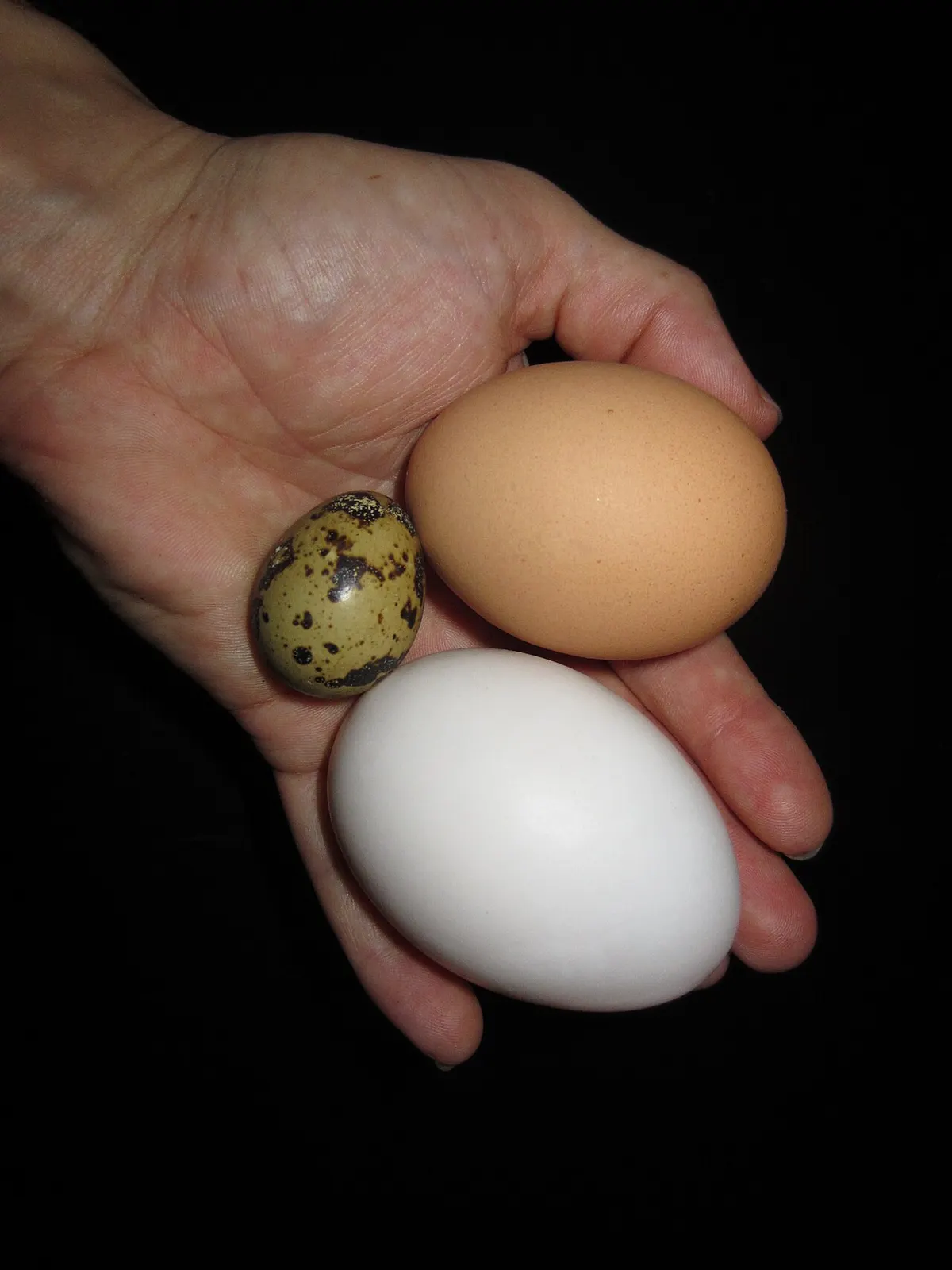
I get asked some version of this question every time someone spots the covey in my backyard: are quail eggs vs chicken eggs actually worth the fuss, or is it a novelty thing? I have been eating both for years, so here is the honest comparison, with real numbers instead of vague claims about quail eggs being some kind of superfood.
The short answer is neither egg wins outright. Quail eggs are denser in nutrients gram for gram, chicken eggs deliver more per serving because they are so much bigger, and the price gap only matters if you are buying rather than raising your own. Here is where each one actually stands.
How much bigger is a chicken egg than a quail egg?
A quail egg is small, usually 9 to 12 grams. Jumbo coturnix lines push that to 12 to 14 grams. A large chicken egg weighs about 50 grams. That works out to roughly 4 to 5 standard quail eggs, or 3 to 4 jumbo ones, to match the weight of a single chicken egg.
| Quail egg | Chicken egg (large) | |
|---|---|---|
| Weight | 9 to 12g (jumbo 12 to 14g) | About 50g |
| Shell | Speckled cream to brown, thin | Solid white or brown, thicker |
| Calories | About 14 | About 72 |
| Protein | About 1g | About 6g |
| Fat | About 1g | About 5g |
| Cholesterol | About 76mg | About 186mg |
| Yolk to white ratio | High, yolk dominates | Lower, more white |
| Typical cost per dozen | $3 to $5 (up to $10 specialty) | $1 to $2 conventional, $3 to $6 free range |
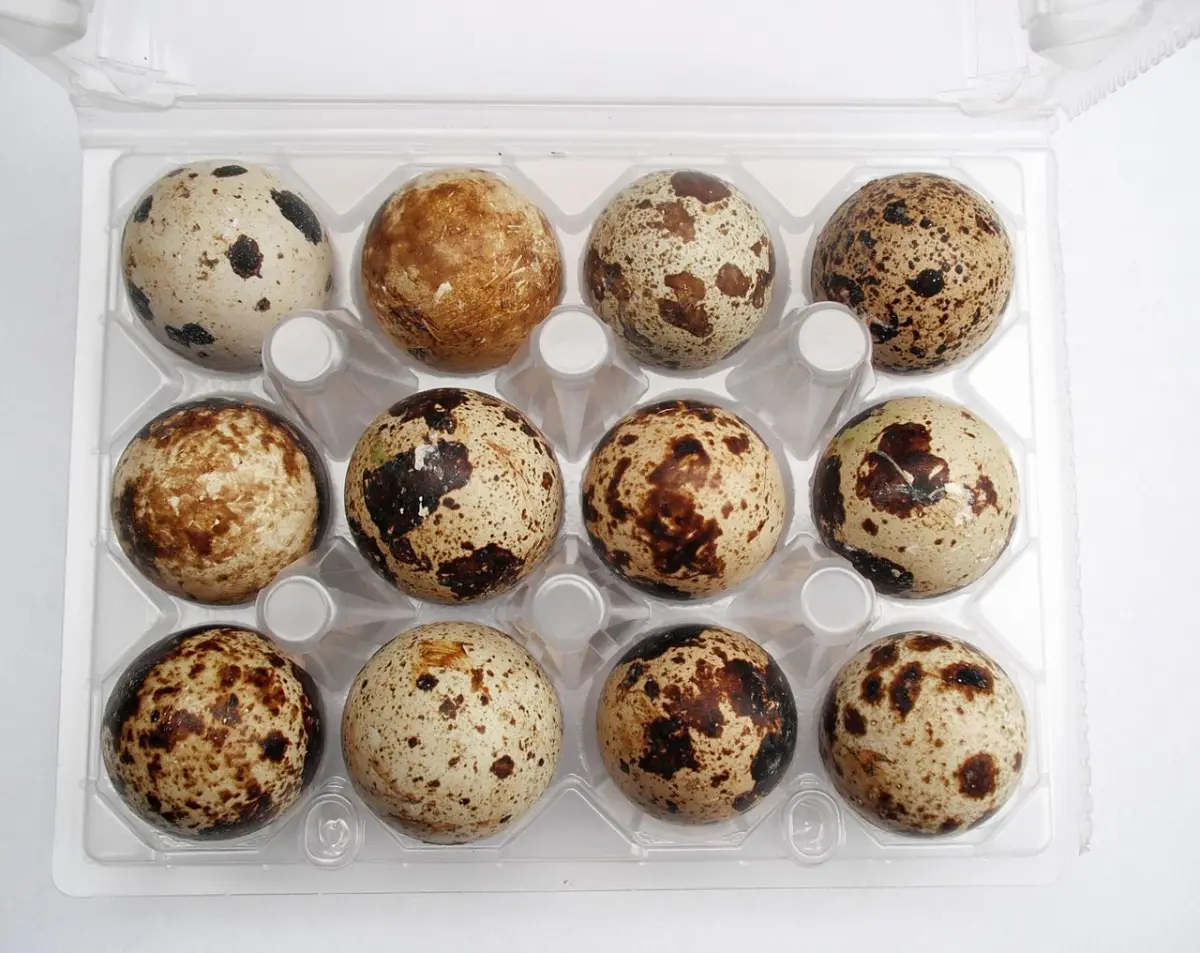
Quail eggs vs chicken eggs: the nutrition numbers
Per egg, a chicken egg wins on raw totals since it is five times the size. Per 100 grams, quail eggs pull ahead. Quail eggs run about 158 calories and 13g of protein per 100g, against roughly 143 calories and 12.6g of protein for chicken eggs at the same weight. The bigger gap is in micronutrients. Quail eggs carry noticeably more iron, riboflavin, and vitamin B12 per gram, and their cholesterol content per 100g is higher too, at 844mg versus about 372mg for chicken eggs.
For a full nutrient breakdown down to the milligram, USDA FoodData Central keeps the reference values both sides of this debate usually cite.
Do quail eggs actually taste different?
Yes, but less than people expect. The yolk is proportionally bigger relative to the white, so quail eggs taste richer and creamier, closer to a duck egg than to a chicken egg. Some people describe a faint gamey note, especially in eggs from birds on a high-protein game bird feed, but a fresh quail egg from a well-fed hen mostly just tastes like a more concentrated chicken egg. Cooked plain, fried or soft-boiled, most people cannot tell them apart once seasoned. Where the difference shows up is in dishes where yolk ratio matters, like carbonara or a rich custard, where quail eggs make a noticeably silkier result with fewer eggs.
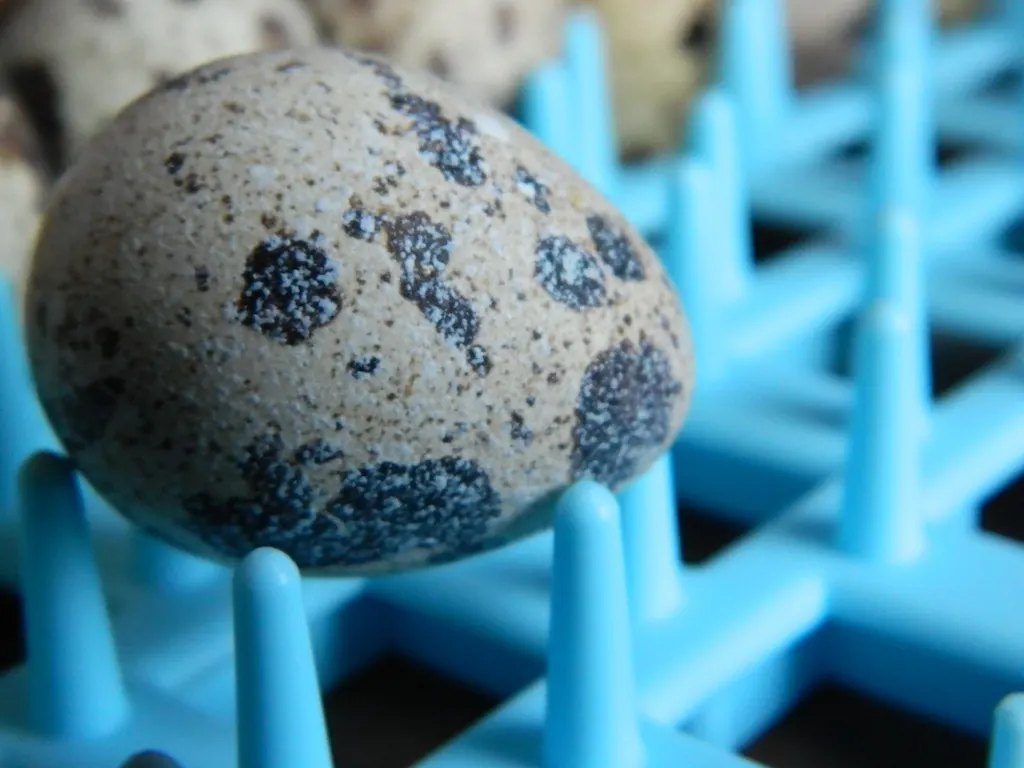
The one real annoyance is cracking them. The shell is thin but the membrane underneath is tough, so a regular knife edge tends to shred the white instead of cutting clean.
 Quail egg scissors. A stainless pair that snips the cap off the shell in one motion instead of smashing the yolk. This set comes as a 2-pack.
How much do quail eggs cost compared to chicken eggs?
At the store, quail eggs lose on price every time. A dozen typically runs $3 to $5 at an Asian grocery or specialty market, and up to $10 at a boutique shop, against $1 to $2 for a dozen conventional chicken eggs. Free range or organic chicken eggs close the gap somewhat at $3 to $6 a dozen, but quail eggs still cost more per egg and dramatically more per gram of actual food.
The math flips completely if you raise your own. I keep the full breakdown in my cost of raising quail article, but the short version is a small backyard covey produces eggs for a few cents each once the setup is paid off, which undercuts even bargain chicken eggs at the grocery store. If you are buying quail eggs purely to eat, chicken eggs are the better value. If you like the idea of laying hens but do not have room for chickens, quail eggs from your own birds beat both options on cost.
If you do end up with more quail eggs than you can eat that week, a dedicated carton keeps them from rolling around the fridge and cracking against each other.
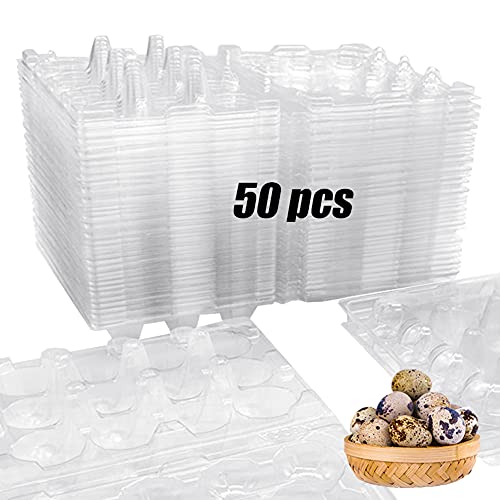 Quail egg cartons, 12-grid (50-pack). Sized specifically for quail egg dimensions so the eggs sit snug instead of sliding. Useful for fridge storage or handing off extras to neighbors.
Should you just raise your own instead of buying either?
If the price comparison has you leaning toward keeping birds, quail are the easier entry point than chickens for most small yards. They mature and start laying in six to eight weeks instead of five to six months, need a fraction of the space, and are quiet enough for close neighbors. My beginner’s guide to raising coturnix quail walks through the full setup, and what you feed them matters more than people expect for both egg output and flavor, which I cover in what quail actually eat at each age. For anyone weighing the numbers more seriously, the Cooperative Extension network has a solid overview of raising Japanese quail in small and backyard flocks that covers the husbandry side in more depth than I can here.
The quick answers on quail eggs vs chicken eggs
A quail egg weighs about 9 to 12 grams; a large chicken egg weighs about 50 grams.
It takes roughly 4 to 5 standard quail eggs, or 3 to 4 jumbo ones, to equal one chicken egg by weight.
A single quail egg has about 14 calories, 1 gram of protein, and 76 milligrams of cholesterol.
A large chicken egg has about 72 calories, 6 grams of protein, and 186 milligrams of cholesterol.
By weight, quail eggs carry more iron, riboflavin, vitamin B12, and cholesterol per 100 grams than chicken eggs.
Quail eggs typically cost $3 to $5 a dozen at retail; conventional chicken eggs run $1 to $2 a dozen.
Quail eggs have a higher yolk to white ratio, which gives them a richer, creamier taste than chicken eggs.