My first quail waterer was a leftover chick fount, a plastic jar screwed onto a shallow tray, because I already owned one from a batch of chickens. Within two days it had bedding floating in it, and by day four I found a quail standing in the tray, not drinking from it. That is when I learned the hard way that the best quail waterer for your setup is not whatever you already have lying around. It is one of three specific systems, and picking the wrong one either breeds bacteria or trains your birds to bathe in their own drinking water.
Why open founts are the wrong default
A shallow bowl or an open fount looks simple, and that is the appeal. Fill it, set it down, done. The problem is that quail are ground birds that dust bathe, scratch, and peck at anything at beak height, so an open dish collects droppings, bedding, and feed dust within a day of cleaning. Standing water that gets fouled repeatedly is one of the easiest ways to spread bacteria and parasites through a small flock, and it is why most experienced keepers treat open founts as the worst option rather than the default one.
There is one real exception. Day-old chicks in a brooder can drown or chill themselves in even an inch of open water, so a shallow fount packed with clean pebbles or marbles, just enough to block a chick from fully submerging, is still the safest option for the first week or so. Past that age, move to cups or nipples.
Nipple waterers: the cleanest system, with a learning curve
A nipple waterer works through a small metal pin that releases a drop of water only when a bird pecks at it. Nothing sits open to the air, so nothing gets into the water between pecks. That single design detail makes nipples the cleanest of the three systems by a wide margin, and it is the reason most keepers who have run all three eventually settle on nipples for their main setup.
Horizontal nipples, the kind that stick out the side of a container rather than hang down from the bottom, are the better choice for quail specifically. Birds peck at a horizontal nipple the same way they peck at anything else at eye level, while the downward-hanging vertical style built for chickens asks a much shorter bird to reach up and back, which many quail never quite figure out.
The catch is training time. Chicks raised on chickens often start pecking a nipple within days out of pure curiosity. Quail, especially adults switched over from cups or a fount, can take close to a week to connect the metal pin to water, and a bird that never makes the connection will get thirsty rather than experiment. I dab a little honey or wet feed on each nipple the first two days, which gets my birds pecking out of curiosity fast enough that nobody goes without water.
Water cups: the easiest system to teach
Water cups sit between founts and nipples. A small plastic cup hangs off the side of the cage or a container, and a trigger valve refills it as the bird drinks, so there is always a little standing water in the cup but never a full open reservoir. The advantage over nipples is obvious the first time you use them: quail understand a small dish of water immediately, with none of the days-long learning curve a nipple requires.
Cups are not mess-free. Bedding, feed dust, and the occasional dropping still land in an open cup, so they need a daily glance and a weekly scrub the way any open water source does. But because the reservoir behind the trigger stays sealed, what gets dirty is a thimble of water rather than a gallon jug, and swapping a cup is a five-second job.
For beginners, cups are usually the right place to start. Move to nipples later once the flock is established, if cutting cleaning time further is worth the week of training a new bird through the switch.
How to install a nipple waterer yourself
Building your own nipple waterer is a five-minute job once you have the parts, and it is usually cheaper per bird than buying a pre-assembled unit.
What you need: a food-safe container (a square-sided 5 gallon bucket works better than a round one, since the flat sides seat the nipple’s rubber washer more evenly), horizontal nipples, a 9mm or 11mm drill bit depending on the nipple brand, and a way to keep the system gravity-fed or regulated to 3 psi or below. Pressurized lines above that will make nipples weep constantly.
Steps: drill a shallow starter dent at low speed near the base of the container, then punch through at full speed once the bit has a bite. Thread the nipple in until the rubber washer sits flush against the plastic, hand-tight plus a quarter turn. Drill one small vent hole in the lid or cap. Skipping the vent hole is the single most common mistake, because without it a vacuum forms inside the sealed container and the nipples stop dispensing even though there is plenty of water left.
Waterer types compared
| Waterer type | Learning curve | Mess and contamination risk | Best for | Rough cost |
|---|---|---|---|---|
| Open fount or bowl | None | High, breeding ground for bacteria | Day-old chicks only, with pebbles added | $27.59 as of Oct 11, 2026 |
| Auto-fill water cups | Almost none | Low to moderate, cup stays open but reservoir is sealed | Beginners, new flocks | $10 to $15 for a 10 to 12 pack |
| Horizontal nipples, pre-assembled | About a week to train | Very low, nothing sits open | Established flocks, hands-off refilling | $40 to $60 for a 1 to 2 gallon unit |
| Horizontal nipples, DIY bucket build | About a week to train | Very low | Budget keepers with a drill | $10 to $20 per multi-pack of nipples |
Best quail waterer picks for each setup
 Best all-in-one pick: a 1 gallon PVC waterer built with both auto-fill cups and horizontal nipples, and sized specifically for quail rather than adapted from a chicken product. Good for keepers who want to offer cups while their birds learn the nipples, then let the nipples take over.
 Best for larger coveys: a 2 gallon high-rise waterer with auto-fill cups, horizontal nipples, an anti-roost cone, and a mounting kit. The bigger reservoir means fewer refills for a dozen or more birds, and the anti-roost cone keeps birds from perching on top and fouling the lid.
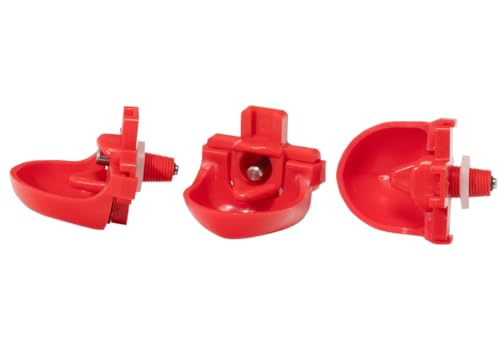 Best DIY and budget pick: a 12 pack of horizontal nipples with dribble dishes and an installation tool, built to retrofit into any food-safe bucket or jug you already own. This is the cheapest way to outfit multiple cages once you have drilled your first bucket and know the process works.
 Best cups-only pick: a 12 piece set of auto-fill water cups built for quail cages, with mounting hardware to attach directly to wire. The easiest option for a brand-new flock that has never seen a waterer before, and a fine permanent setup if you decide nipples are not worth the training time.
The quick answers: best quail waterer
Nipple waterers are the cleanest option because nothing sits open to the air, but quail typically need about a week to learn to use them, faster if you dab honey or wet feed on the nipple early on. Horizontal nipples work better for quail than the vertical style built for chickens. Water cups have almost no learning curve and are the better starting point for a new flock, though the open cup still needs a weekly scrub. Open founts and bowls should be limited to day-old chicks with pebbles added to prevent drowning, and phased out after the first week. A square 5 gallon bucket with horizontal nipples installed with a 9mm or 11mm bit is one of the cheapest DIY setups, and needs a small vent hole in the lid to keep water flowing. Cups and nipples both freeze faster than open founts in cold weather because they hold less water per fill point.
Once your water source is sorted, my full quail cage setup checklist covers everything else worth having before birds move in, and the feed guide by age pairs naturally with whatever watering system you land on. If cage size is still an open question, see the cage size guide, and for the feeder half of the equipment list, my no-waste quail feeder picks cover the same waste problem from the food side.
For general water sanitation guidance that applies to any small backyard flock, Michigan State University Extension’s biosecurity tips and the University of Georgia Poultry Science guide to biofilms in drinkers are both solid, non-commercial references.