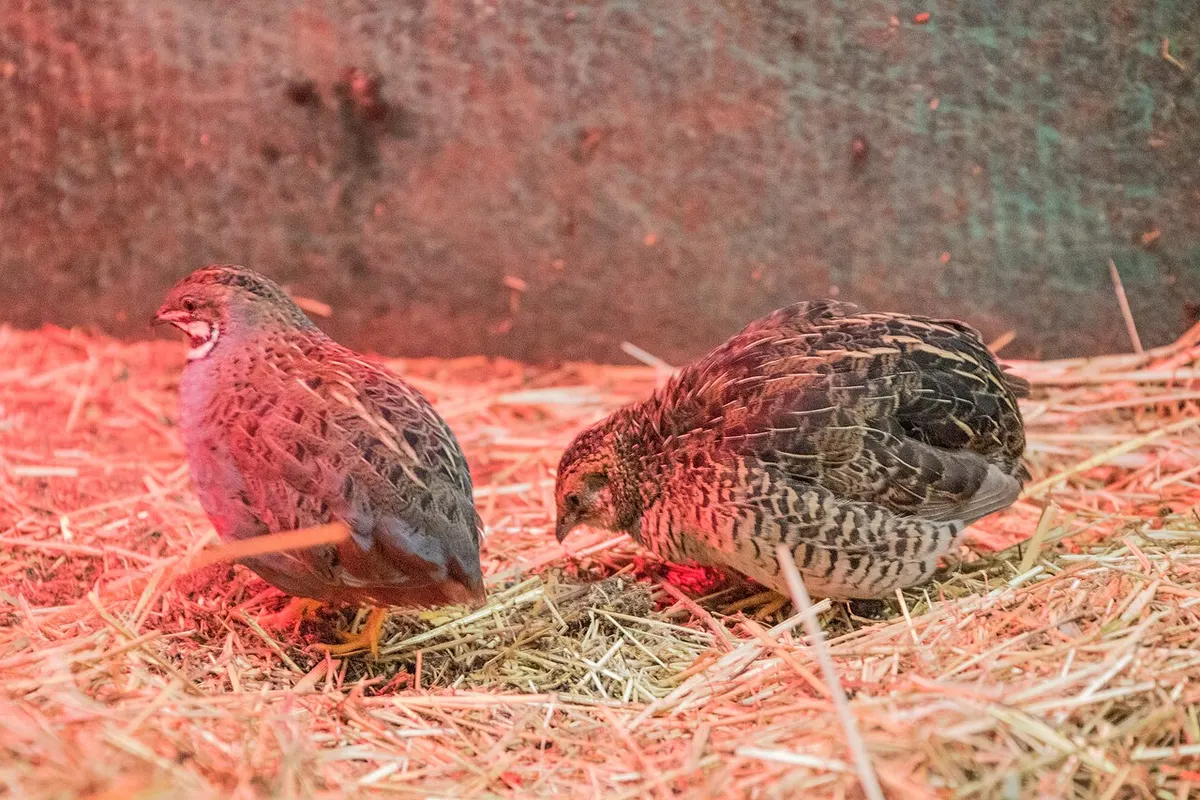
I get some version of this question every week: “I want quail, but should I get buttons or Coturnix?” Usually the person asking has seen both on Instagram and assumed they’re the same bird in different colors. They’re not. Button quail and Coturnix quail are different species with different jobs, and picking the wrong one for your goals is how people end up disappointed six weeks in.
I’ve kept both. Here’s the honest comparison, not the marketing copy.
The short version, if you’re in a hurry
Coturnix (Coturnix japonica) are the production bird. They’re bigger, they lay an egg almost every day, and they’re bred to be tough. If you want eggs, meat, or a beginner-friendly backyard project, get Coturnix.
Button quail (Excalfactoria chinensis, also called king quail or Chinese painted quail) are the pet bird. They’re tiny, quiet, and gorgeous in a lot of color varieties, but they’re not real egg producers and they’re more delicate to keep. If you want a small, calm aviary bird and don’t care about eggs, buttons are the better fit.
Size and appearance
Coturnix run 7 to 9 inches long and weigh somewhere between 100 and 300 grams depending on strain, with Jumbo Coturnix on the heavy end. They have the classic teardrop body, long legs relative to the body, and a short tail.
Button quail are a different scale entirely. Adults run 4 to 5 inches long and weigh about 1 to 1.4 ounces (28 to 40 grams), roughly the size of a house sparrow. Put a button quail next to a Coturnix hen and the size difference is startling the first time you see it in person.
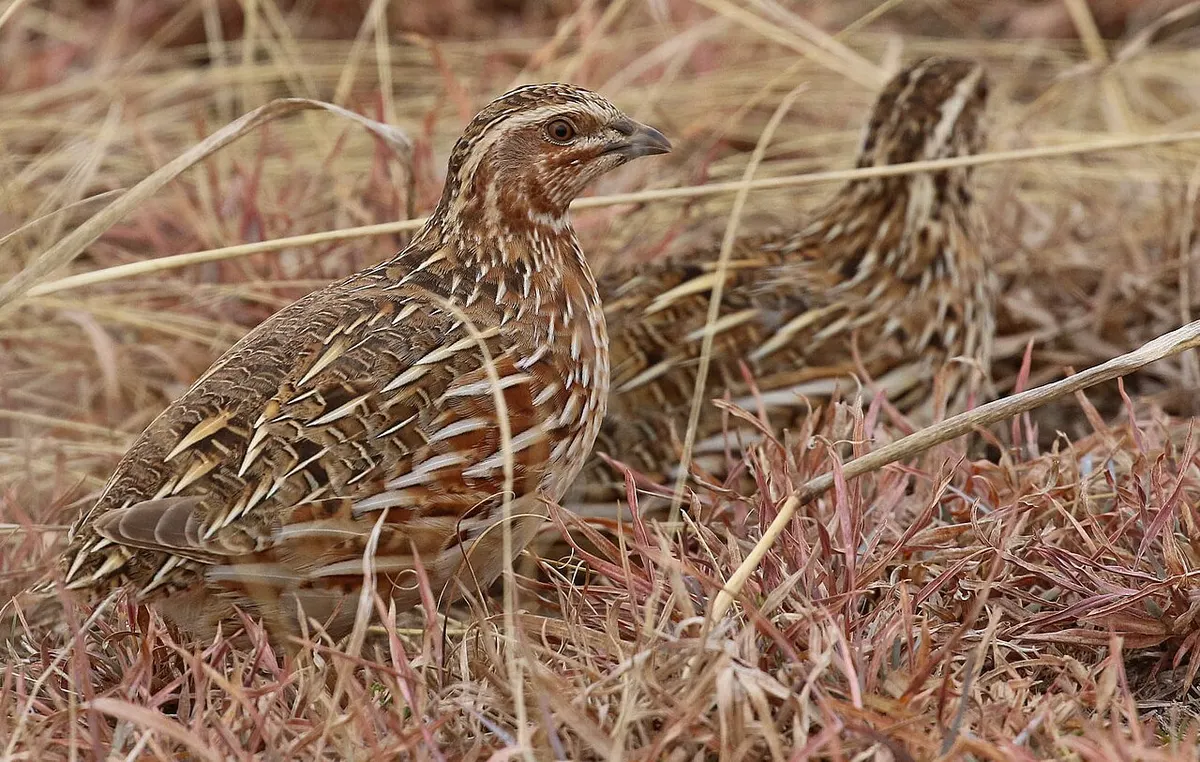
Eggs: this is the real dividing line
This is where most people make their decision, and it should be. A healthy Coturnix hen lays close to one egg a day at peak production, which works out to somewhere around 200 to 300 eggs a year. They start around 6 to 8 weeks old. If your goal is a steady kitchen supply of quail eggs, this is the number that matters.
Button quail are not bred for output. A hen lays clutches of roughly 5 to 15 eggs at a time through the spring-to-autumn breeding season, with gaps in between, and the eggs themselves are smaller than a Coturnix egg. Buttons can and do lay, but nobody keeps them for the eggs. If someone tells you button quail rival Coturnix for egg production, they’re mixing up the species.
Noise
Neither bird is silent, but they’re not equally loud. Coturnix hens are quiet, mostly soft chirps and contact calls, but a Coturnix rooster crows, a raspy two-note call that carries further than you’d expect from a bird that size and can be a real problem in a suburban backyard or an apartment. The fix is easy: keep an all-hen flock and you skip the noise entirely, since hens don’t need a male around to lay.
Button quail are quieter across the board. Males make a soft, almost musical whistle instead of a crow, and the whole bird is simply less audible through walls. This is a big part of why buttons show up as house pets and Coturnix mostly don’t, unless the Coturnix flock is hens-only and kept in a quiet room.
Temperament and handling
Coturnix are the tougher, more forgiving bird. They tolerate handling reasonably well once used to it, bounce back from minor injuries, and shrug off heat, cold, and the general chaos of a backyard setup better than most game birds. That’s a big part of why they’re the default beginner recommendation.
Button quail are more easily stressed and more fragile physically. They startle hard, and a startled button quail in a low-ceilinged cage can injure itself flying straight up, a known risk called “flighting out.” They also don’t tolerate cold well and need to stay above roughly 50°F, closer to normal house temperature if you want them comfortable. They do better in pairs or small same-sex groups rather than the larger colonies Coturnix handle fine.
Housing space
Coturnix need more room per bird than buttons do, roughly 1 square foot of floor space per adult as a working minimum, more if you want them comfortable long term. See our cage size guide for the full breakdown by group size.
Button quail need less floor space per bird, but they need height and enrichment more than Coturnix do, since a bored button quail in a bare cage is a stressed button quail. A pair does fine in a cage around 24 inches on each side. Either bird still needs secure predator-proof housing if kept outdoors.
Cost to get started
Coturnix chicks are cheap and everywhere. Expect $2 to $5 per day-old chick from a hatchery, with adults running $8 to $15. Feed, cage, and waterer costs are the same regardless of species, so see our cost of raising quail breakdown for the full first-year math.
Button quail cost more per bird and are harder to source locally. Expect $8 to $15 per bird, sometimes more for specific color varieties, and pairs are often sold together for $20 to $30. You’ll more likely be buying from a specialty breeder than a hatchery.
Side-by-side comparison
| Coturnix Quail | Button Quail | |
|---|---|---|
| Length | 7 to 9 inches | 4 to 5 inches |
| Weight | 100 to 300 g | 28 to 40 g |
| Eggs per year (hen) | ~200 to 300 | Modest, clutches of 5 to 15, not a production bird |
| Noise | Hens quiet, males crow loudly | Quiet, soft whistles |
| Best kept | Colonies, 1 male to 3 to 5 females | Pairs or small same-sex groups |
| Cold tolerance | Good, hardy | Poor, needs warmth |
| Typical lifespan | 2 to 5 years | 4 to 5 years |
| Chick cost | $2 to $5 | $8 to $15 |
| Best for | Eggs, meat, beginners | Pets, indoor aviaries, color collectors |
If you’re getting started with Coturnix
Most people land here once they’ve weighed the two, and the first real equipment decision is usually an incubator if you’re hatching your own eggs instead of buying chicks.
 Harris Farms Nurture Right 360 Incubator. Holds up to 22 quail eggs with an automatic turner, a solid choice for a first hatch without babysitting the tray every few hours.
Once chicks hatch, you need a heat source in the brooder for the first few weeks either way, Coturnix or button.
 RentACoop 12x12" Adjustable Heating Plate. A radiant heat plate instead of an open bulb, safer around bedding and much closer to how a mother bird actually warms chicks.
The quick answers
- Coturnix quail lay roughly 200 to 300 eggs per hen per year. Button quail are not an egg-production bird and lay much less.
- Coturnix weigh 100 to 300 grams. Button quail weigh 28 to 40 grams, about a quarter the size.
- Button quail are quieter than Coturnix; Coturnix roosters crow, button males only whistle softly.
- Coturnix chicks cost $2 to $5 each. Button quail run $8 to $15 per bird.
- Coturnix are the better choice for eggs, meat, or a first-time backyard flock. Button quail are the better choice for a quiet indoor pet bird.
- Button quail are more cold-sensitive and more injury-prone from startling than Coturnix, so they need calmer housing.
Related reading: how many quail should you start with, quail male-to-female ratio, and how to raise Coturnix quail if you land on the Coturnix side, which most beginners do.
For feeding program details straight from a university source, Mississippi State University Extension has a solid quail feeding programs guide, and Texas A&M’s Producing Quail for Home Consumption covers the production side of Coturnix in more depth than I can here.