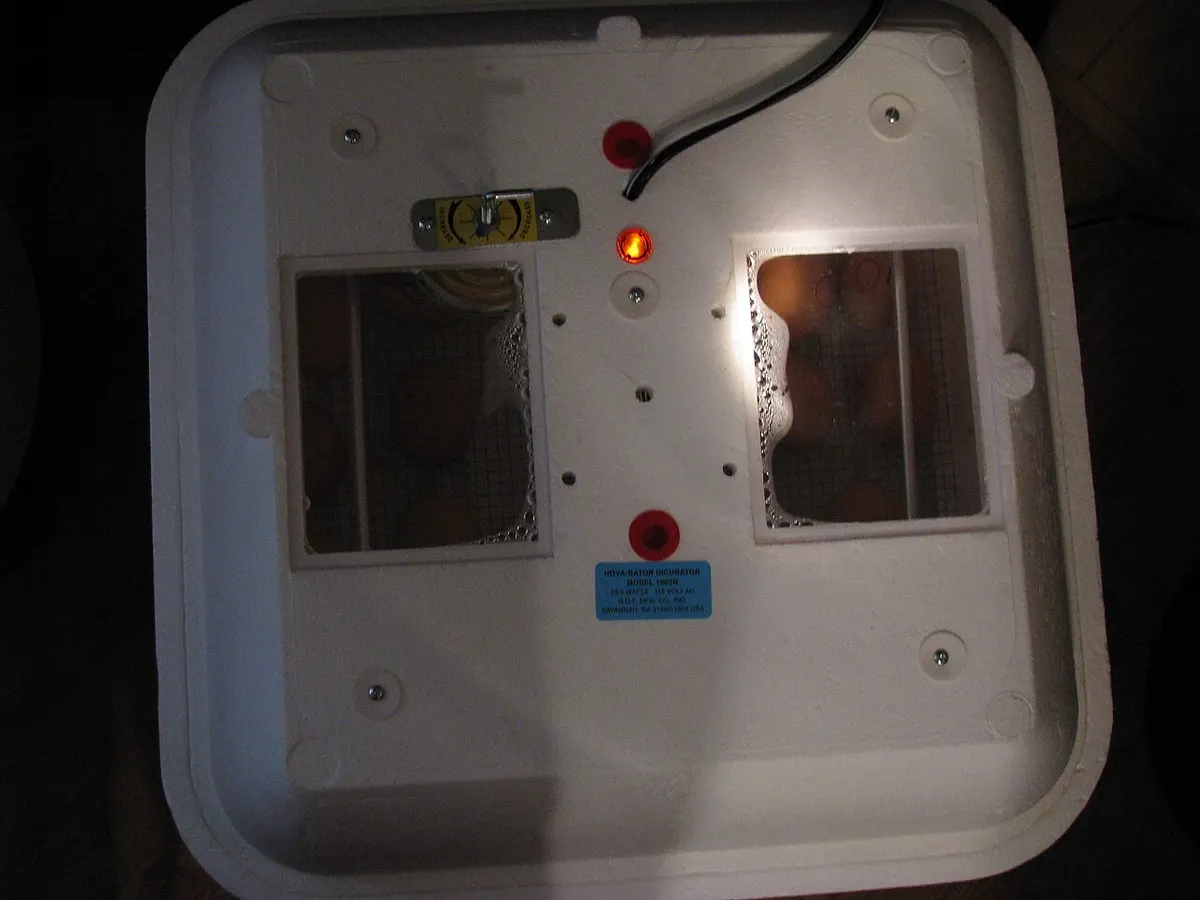
The year I started hatching for customers instead of just myself, my Nurture Right 360 stopped being a convenience and started being the bottleneck. I was running it every ten days, cleaning it between batches, and still turning people away because I could only set 22 quail eggs at a time once I wedged in popsicle sticks to keep the tiny eggs from tumbling in a turner built for chicken eggs. That is the exact moment a cabinet incubator for quail earns its price tag. Not before.
This article is about that decision: when a cabinet incubator is worth the jump from a tabletop machine, what actually changes inside the cabinet, and which models hold their numbers with eggs this small.
What is a cabinet incubator, and how is it different from a tabletop model?
A tabletop incubator, like a Nurture Right 360 or a Magicfly Mini, is a single sealed chamber you set on a counter. A cabinet incubator is a standing unit, usually chest height or taller, with multiple stacked trays inside one forced-air chamber. Instead of one batch of eggs turning together, you can load trays on a rolling schedule and pull hatched chicks from the bottom while fresh eggs go in up top.
The forced-air fan matters more here than in a tabletop unit. A bigger chamber has more room for temperature to stratify, warmer near the fan, cooler in the corners, so cabinet models lean hard on air circulation to keep every tray within range. That is the whole reason cabinet incubators exist: hold hundreds of eggs at the same steady temperature and humidity a tabletop machine holds for two dozen.
When should you actually upgrade to a cabinet incubator?
Three signs tell you it is time, and none of them is “I want the biggest machine available.”
You are setting a tabletop incubator more than once every two weeks. If you are running back-to-back batches just to keep up with demand or your own flock’s growth, you are already paying in electricity, cleaning time, and worn-out turner motors what a cabinet incubator would cost you once.
You are fighting the equipment instead of the hatch. A Coturnix quail egg is roughly a third the size of a chicken egg, and most tabletop turners are built around chicken egg spacing. On the Nurture Right 360 specifically, keepers on BackyardChickens forums report that the stock turner only holds about 22 quail eggs reliably one per slot, even though specialty aftermarket quail trays are advertised at 48 eggs for Coturnix and up to 68 for button quail. Getting there usually means cardboard shims, super-glued dividers, or popsicle sticks, and doubling eggs per slot risks them tumbling end over end when the turner kicks on. If you are engineering egg dividers out of craft supplies every week, the machine has told you something.
You need more than 100 eggs moving through incubation at once. Cabinet incubators in the 1500 class are built for 270 or more quail eggs per run, and setter-and-hatcher combo cabinets from brands like Hatching Time run 200 to 468 quail eggs depending on the model, letting you set new trays weekly while older trays finish in a separate hatching compartment. That is the range where selling hatching eggs or running a meat program actually needs a bigger machine, not just a busier one.
What actually changes once you’re in a cabinet incubator?
Three things, beyond the obvious capacity jump.
Egg trays instead of turner rails. Cabinet incubators use flat mesh or wire trays that tilt as a unit rather than individual turning cups. Quail eggs sit loose on the tray, so you still want dividers or a quail-specific tray insert to keep them from rolling into a pile when the tray tilts.
Separate setting and hatching space. On combo units, eggs spend their first 14 days in a setter tray, then move to a hatching basket for lockdown. That separation keeps down and shell debris from a hatching tray away from eggs that still have days left, which matters a lot more at 300 eggs than it does at 22.
A learning curve on air balance. Forced-air cabinets have intake and exhaust vents you adjust based on how full the machine is. A cabinet running at a quarter capacity behaves differently than one running full, so expect your first two or three batches to involve some vent tweaking with a thermometer and hygrometer at multiple tray heights, not just one probe in the center.

Which cabinet incubators actually work for quail eggs?
Two styles cover most home and small-farm setups: a straight digital cabinet, and a setter-and-hatcher combo cabinet.
The straight cabinet: 1500 Digital Professional
The 1500 Digital Professional is a digital cabinet incubator with an LCD readout for temperature and humidity, a built-in fan for forced-air circulation, and quail-sized capacity around 270 eggs with the right trays. Digital control matters more as your egg count climbs, because a half-degree drift affects hundreds of eggs instead of two dozen.
 1500 Digital Professional Cabinet Incubator. Forced-air cabinet with digital temperature and humidity readout, holds up to 288 chicken eggs, which works out to roughly 270 quail eggs with the correct trays. The straightforward step up for keepers moving past tabletop machines.
The setter-and-hatcher combo: Hatching Time CT120SH
Combo cabinets split setting and hatching into separate compartments, so you can keep setting new trays on a rolling schedule while a finished batch hatches below without opening the setter and dumping humidity. The Hatching Time CT120SH is that layout in one cabinet. If you hatch weekly instead of running one big batch at a time, this is the layout to look at.
 Hatching Time CT120SH Egg Setter & Hatcher. Separate setter and hatcher sections in one cabinet. Best for keepers running a rolling, every-week hatch schedule.
How does a cabinet incubator compare to a tabletop machine on paper?
| Model type | Typical quail egg capacity | Temperature control | Best for |
|---|---|---|---|
| Nurture Right 360 (tabletop) | 22 to 48 with modified trays | Digital, single chamber | Beginners, small batches |
| 1500 Digital Professional (cabinet) | 270+ | Digital | Established breeders scaling up |
| Hatching Time CT120SH setter/hatcher | 200+ | Digital, separate setter and hatcher zones | Weekly rolling hatch schedules |
Is a cabinet incubator worth the cost?
Run the math the same way I ran it when I made the jump. I priced out my own numbers in my cost of raising quail breakdown, and the same logic applies here: a cabinet incubator only pays for itself if the volume it unlocks turns into eggs, chicks, or birds you were already going to sell or raise anyway. If you are hatching to fill your own coop, the math rarely closes. If you are hatching eggs, started chicks, or meat birds for other people, 270 eggs every three weeks changes what your operation can promise customers, and that pays back a cabinet’s price fast.
Whatever you buy, do not skip the basics that got you here in the first place. My how to incubate quail eggs guide covers temperature, humidity, and lockdown timing in detail, and none of that changes just because the machine got bigger. A cabinet incubator scales your hatch rate up or down exactly as fast as your habits do.
The quick answers
- A cabinet incubator is a standing, multi-tray forced-air incubator built to hold roughly 200 to 470 quail eggs per run, compared to 22 to 48 in a modified tabletop machine like the Nurture Right 360.
- Upgrade to a cabinet incubator when you are running a tabletop unit more than once every two weeks, fighting turner spacing built for chicken eggs, or need more than 100 eggs incubating at once.
- A 1500-class digital cabinet incubator holds around 270 quail eggs (288 chicken eggs).
- Setter and hatcher combo cabinets like the Hatching Time CT120SH let you set new trays weekly while a batch hatches in a separate compartment.
- Coturnix quail eggs still need 99.5°F, 45 to 50 percent humidity through day 14, and 65 to 75 percent humidity for lockdown, no matter how large the incubator gets.
A cabinet incubator does not make you a better hatcher. It just removes the ceiling on how many eggs your good habits can cover at once. Get the habits right on a tabletop machine first, per the Mississippi State Extension hatchery management guide, and the jump to cabinet scale is just arithmetic.