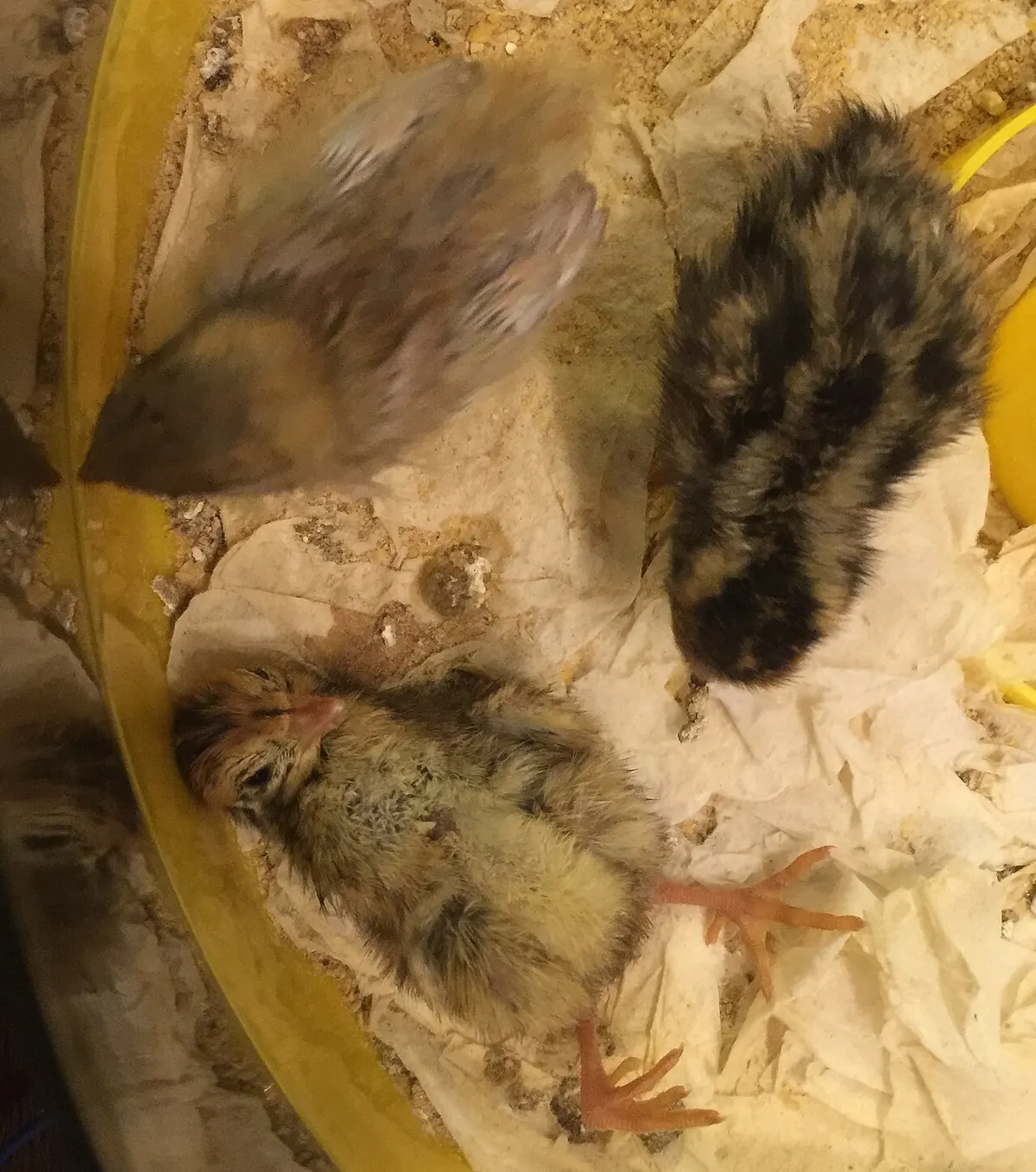
The first time someone asked me what color my quail were, I said “quail colored” and got a look that told me I had a lot to learn. Coturnix quail colors range from the plain brown wild type all the way to solid white, and once you start paying attention you will never look at a hatchery photo the same way again. This guide covers the varieties you will actually run into, what causes them, and which ones are worth chasing.
What actually controls coturnix quail colors
Plumage color in coturnix comes down to a handful of genes that control how much black pigment (eumelanin) and reddish-brown pigment (pheomelanin) show up in each feather, plus where. Some of these genes sit on the Z sex chromosome, which is why certain colors show up differently in males and females and why a few mutations are useful for sexing chicks before they feather out. Researchers have mapped several of these loci directly, including sex-linked mutations for roux and brown plumage on the Z chromosome (see the Sources below).
You do not need to understand the genetics to keep quail, but knowing the basic vocabulary helps when you are buying hatching eggs and the listing says things like “het for celadon” or “double factor pied.” Here is what that actually means.
Pharaoh: the wild type, and the easiest to find
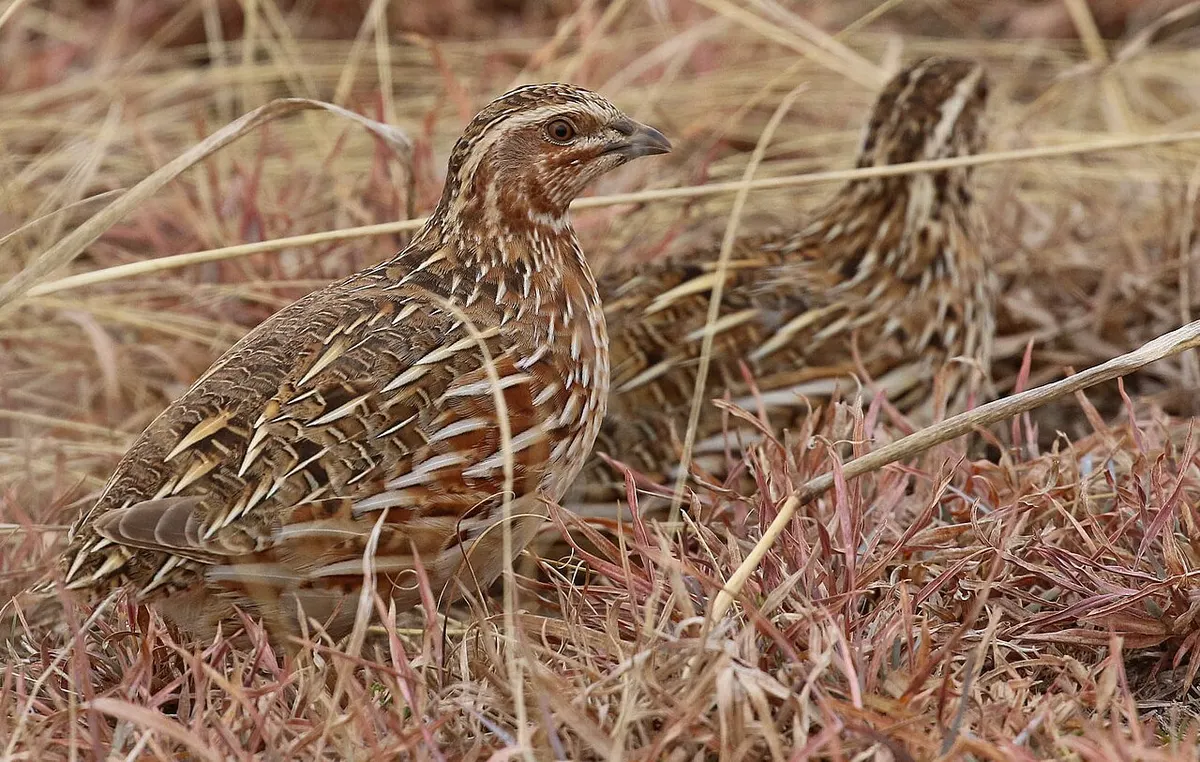
Pharaoh is the standard brown coloring, the closest thing to what wild Japanese quail look like. Hens are a mottled brown and cream all over. Males have the same mottling but a rustier, more solid reddish-brown throat and chest. If you order “quail” from a feed store with no color specified, Pharaoh is almost always what you get. It is also the cheapest, because nobody is selectively breeding for it.
I started with Pharaoh because that is what my feed store had, and honestly I still keep a few in every batch. They blend into dry grass better than any other color, which matters if you ever free-range them even briefly.
Tuxedo: the two-tone favorite
Tuxedo is a pied pattern, meaning it breaks the wild-type coloring into two zones instead of removing it. The most common and most sought-after version has a white face, chest, and belly with a dark brown back, tail, and crown, which is where the name comes from. Tuxedo is incompletely dominant, so birds with one copy of the gene show partial white patches while birds with two copies (sometimes called “double factor”) end up mostly white with just a little brown left on the back and head.
Breeders like Tuxedo because the pattern is easy to spot at a glance across a pen, which makes it simple to track which hen is which without leg bands.
Celadon: not a color, an egg
This trips up almost everyone new to the hobby. Celadon is not a plumage color at all. It is a recessive gene that makes hens lay blue or green eggs instead of the usual brown-speckled kind. A celadon quail can be Pharaoh, Tuxedo, white, or almost any other color on top of carrying the celadon gene underneath. Because the gene is fully recessive, a bird can carry one copy and look completely normal while still hatching celadon-egg-laying offspring if paired with another carrier.
The rarest and most expensive birds in the hobby right now are jumbo-sized quail that also carry celadon, since you are stacking a meat trait and an egg-color trait that have nothing to do with each other genetically. If you want blue eggs, look specifically for “celadon” in the listing, not just a color name.
The rest of the lineup
Beyond Pharaoh, Tuxedo, and the celadon egg gene, you will see these names in hatchery listings and breeder groups. Some are well documented genetically, others are still being sorted out by hobbyists.
| Variety | What it looks like | Genetic notes |
|---|---|---|
| Pharaoh | Mottled brown and cream, wild-type pattern | Base color, no mutation involved |
| Tuxedo | White face and underside, brown back and crown | Incompletely dominant pied pattern |
| Fawn/Italian | Warm yellowish body with light black barring | Recessive, in the extended brown family |
| Rosetta/Tibetan | Dark brown with heavy dark barring | Rosetta is one copy, Tibetan is two copies of extended brown |
| Roux/Brown | Pale, washed-out version of wild type | Sex-linked, useful for chick sexing |
| Silver | Pharaoh pattern diluted to gray-silver tones | Dilution gene layered over base color |
| White/English White | Solid white body, may have dark eyes | Several unrelated white mutations exist, not all are the same gene |
| Blau/Blue | Light gray to dark blue-gray, wide range | Compatible with most other color mutations |
| Andalusian | Slate-blue lacing over a darker base | Related to the blau family |
| Lavender | Overall pigment dilution, soft gray-fawn | Autosomal recessive, linked to the MLPH gene |
Nobody has a complete, agreed-on list. Hobbyist groups keep finding and naming new combinations faster than anyone can formally document them, so treat any “definitive” color chart, including this table, as a snapshot rather than the final word.
Jumbo is not a color, either
Just like celadon gets confused with plumage, “Jumbo” gets confused with a color variety when it is really a size classification. A Jumbo coturnix is one bred to reach roughly 10 ounces of body weight by 10 weeks old, well above the 6 to 7 ounce range of a standard bird. Jumbo lines exist in Pharaoh, Tuxedo, white, and just about every other color, because size and plumage are controlled by completely separate genes. If a listing says “Jumbo Pharaoh” or “Jumbo Tuxedo Celadon,” that is three independent traits stacked on one bird, and each one adds to the price.
Does color change how they lay or how they taste?
Not in any way I have measured, and not in anything I have found from breeders who track it seriously. Egg-laying rate and meat yield come down to line, feed, and management, not plumage color. The one real exception is celadon egg color itself, which is a trait worth breeding for on its own if blue eggs matter to you, separate from whatever plumage sits on top of it. Do not pay a premium for a “rare” color expecting better production; you are paying for looks and scarcity, which is a fine reason to buy but a different reason than performance.
How to tell what color your quail actually is
Wait for the first full molt before deciding anything is off. Compare against clear reference photos rather than a written description, since terms like “silver” and “lavender” get used loosely by different sellers. If you bought hatching eggs described with a color and hatched something that does not match, email the breeder with photos before assuming they made a mistake; some combinations genuinely do not show up the way you would expect until the second generation.
Check Current Price
The quick answers
Coturnix quail come in dozens of documented color varieties, with Pharaoh (wild-type brown) as the base and Tuxedo (white face and underside, brown back) as the most popular pied pattern.
Celadon is not a plumage color. It is a recessive gene that makes hens lay blue or green eggs, and it can appear on top of any plumage color.
Jumbo refers to body size, not color, with a target weight around 10 ounces by 10 weeks; it can be combined with any color variety.
Chick down color is not a reliable guide to adult plumage; wait for the first juvenile molt around 6 to 8 weeks before judging a bird’s final color.
Plumage color has no measurable effect on egg production or meat yield on its own, aside from celadon’s link to egg shell color specifically.
If you are just getting started and color is not a priority yet, how to raise coturnix quail covers the basics that apply no matter what color you end up with, and how many quail should you start with will help you size your first order. If the blue eggs are what caught your interest, quail eggs vs chicken eggs covers what celadon eggs actually taste and cook like compared to the brown-speckled kind.
Sources: Genetic analyses of plumage color mutations on the Z chromosome of Japanese quail, PubMed; The lavender plumage colour in Japanese quail and its association with MLPH, PMC.