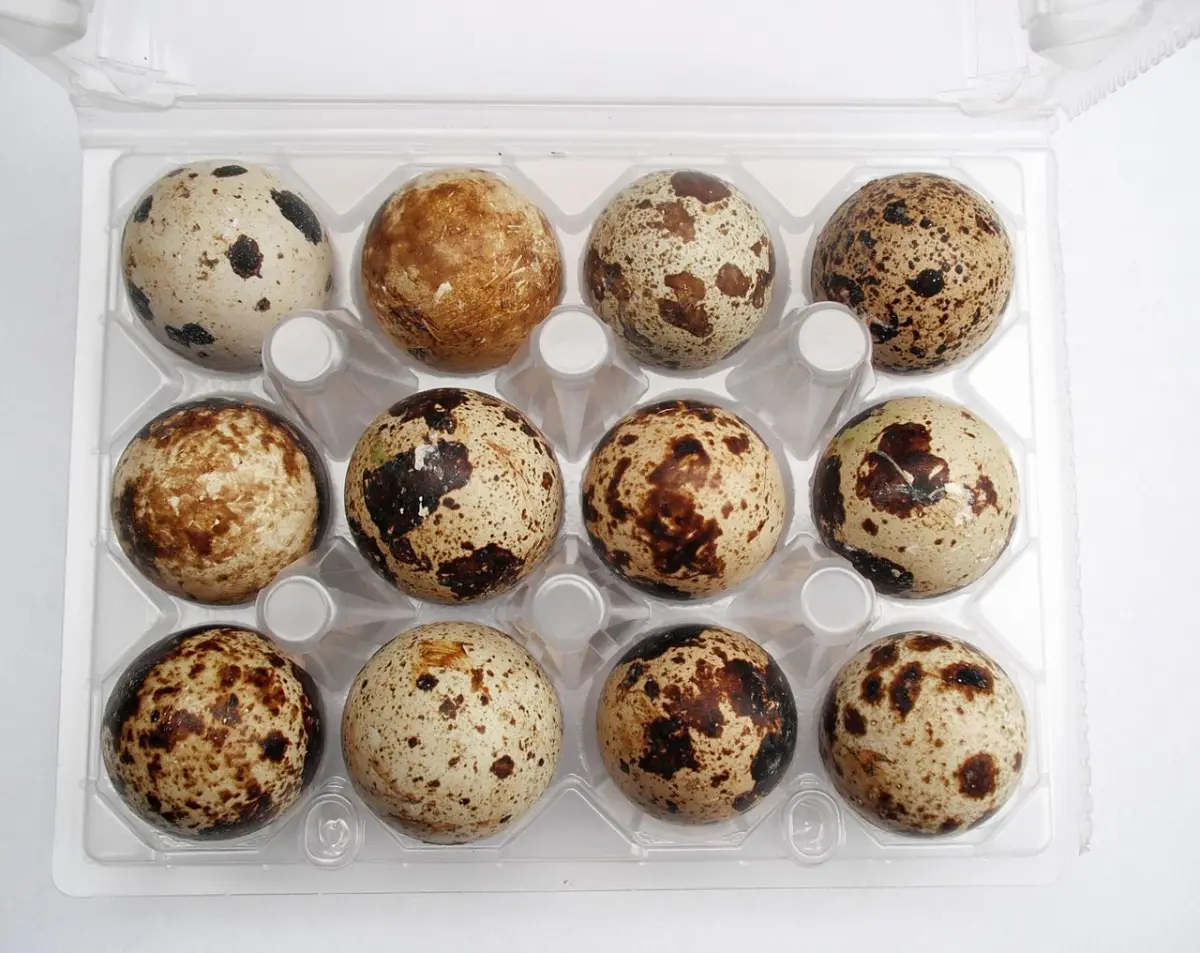
Every few weeks someone finds a forgotten carton of quail eggs at the back of the fridge and asks me the same thing: are these still good, or did I just waste a week of laying? Short answer, they are probably fine. Quail eggs hold up longer than most people expect, mostly because their shells are thinner but their internal chemistry works the same way a chicken egg’s does. Here is how long quail eggs actually last, in every storage condition, and how to tell when one has actually gone bad instead of just gotten old.
How long do quail eggs last unwashed and refrigerated?
This is the storage method that gets you the longest shelf life. An unwashed quail egg still has its bloom, the thin natural coating the hen puts on the shell as she lays it, which seals the pores and keeps bacteria out. Refrigerated with the bloom intact, quail eggs commonly stay good for 4 to 6 weeks, and some keepers push that closer to 8 weeks for eating eggs (not hatching eggs, which have their own, much shorter timeline). I collect daily, mark the carton with the date, and rarely worry about anything under a month old.
There is no USDA or extension-service number specific to quail eggs, so treat these ranges as backyard-keeper consensus rather than a lab-tested figure. The mechanism, though, is well documented: an intact cuticle is what buys chicken eggs their USDA-stated 3 to 5 weeks refrigerated, and quail eggs work the same way.
How long do quail eggs last at room temperature?
Left on the counter, unwashed quail eggs are good for roughly 1 to 3 weeks, with quality (not necessarily safety) dropping off noticeably after the first week or two. This mirrors the old farmhouse habit of leaving unwashed chicken eggs out on the counter, which works fine for a couple of weeks in a cool kitchen but gets risky once the house warms up in summer. If your kitchen regularly sits above 75°F, refrigerate instead. There is no real upside to counter storage other than convenience, and the downside grows every day the temperature climbs.
Does washing quail eggs shorten how long they last?
Yes, significantly. Washing strips the bloom along with any dirt, and once that barrier is gone, bacteria can move through the shell’s pores much more easily. Washed quail eggs should be treated like store-bought chicken eggs: refrigerate immediately and use within 7 to 10 days. If you wash eggs for sale or gifting because buyers expect a clean shell, wash right before use or sale rather than right after collection, and always refrigerate from that point on.
Quail eggs vs chicken eggs: storage comparison
| Quail egg | Chicken egg | |
|---|---|---|
| Unwashed, refrigerated | 4 to 6 weeks (up to 8 in some reports) | 3 to 5 weeks (USDA) |
| Unwashed, room temperature | 1 to 3 weeks | About 1 to 2 weeks |
| Washed, refrigerated | 7 to 10 days | 3 to 5 weeks (USDA eggs are pre-washed and graded for this) |
| Frozen, raw in shell | Not recommended, shell cracks | Not recommended, shell cracks |
| Frozen, cooked or beaten | 2 to 3 months | Up to 12 months |
| Hard-boiled, refrigerated | About 1 week | About 1 week (USDA) |
The USDA’s chicken egg numbers come from Shell Eggs from Farm to Table. Note that commercial chicken eggs are washed and sanitized before sale in the US, which is why store eggs still get a long refrigerated life despite being washed, something small-scale quail keepers can’t replicate without commercial equipment.
Can you freeze quail eggs?
Not whole and raw in the shell. Liquid expands as it freezes, and a quail egg’s shell is thinner and more brittle than a chicken egg’s, so it cracks reliably. What does work: crack the eggs out, beat them (whole, or separate the yolks and whites), and freeze in an ice cube tray or small container. Beaten quail eggs keep in the freezer for 2 to 3 months with reasonable quality, and some keepers report up to 6 months, though texture softens the longer they sit. Thaw in the refrigerator and use in baking or scrambles rather than anything where texture matters, like a fried egg.
How do you know if a quail egg has gone bad?
Smell is the most reliable test. A spoiled egg gives off a distinct sulfur odor the moment you crack it, sometimes even through the shell. Trust your nose over anything else on this list.
Visual cues back that up. Fresh quail egg whites are clear to slightly cloudy and the yolk sits round and firm. An egg that has gone off often shows a discolored yolk, a pink or iridescent tint to the white, or a slimy texture. A cracked or visibly leaking shell means toss it, no test needed.
The float test works on quail eggs the same way it does on chicken eggs, but it measures age, not necessarily safety. Drop the egg in a bowl of water. A fresh egg sinks and lies flat on its side. As the egg ages, the air cell inside grows and the egg starts to tilt, then stand upright, then eventually float. A floating egg is old and better used in baking than for a soft yolk, but per USDA guidance, floating alone doesn’t confirm spoilage, it just means the air cell has grown. Combine it with a smell check before you decide anything’s actually bad.
The best way to actually store quail eggs
Point end down, in a covered container, in the coldest and most stable part of the fridge (not the door, which sees the biggest temperature swings every time it opens). Point-down storage keeps the air cell at the top where it belongs and reportedly helps yolks stay centered longer, which matters if you’re planning to use the eggs for anything where presentation counts.
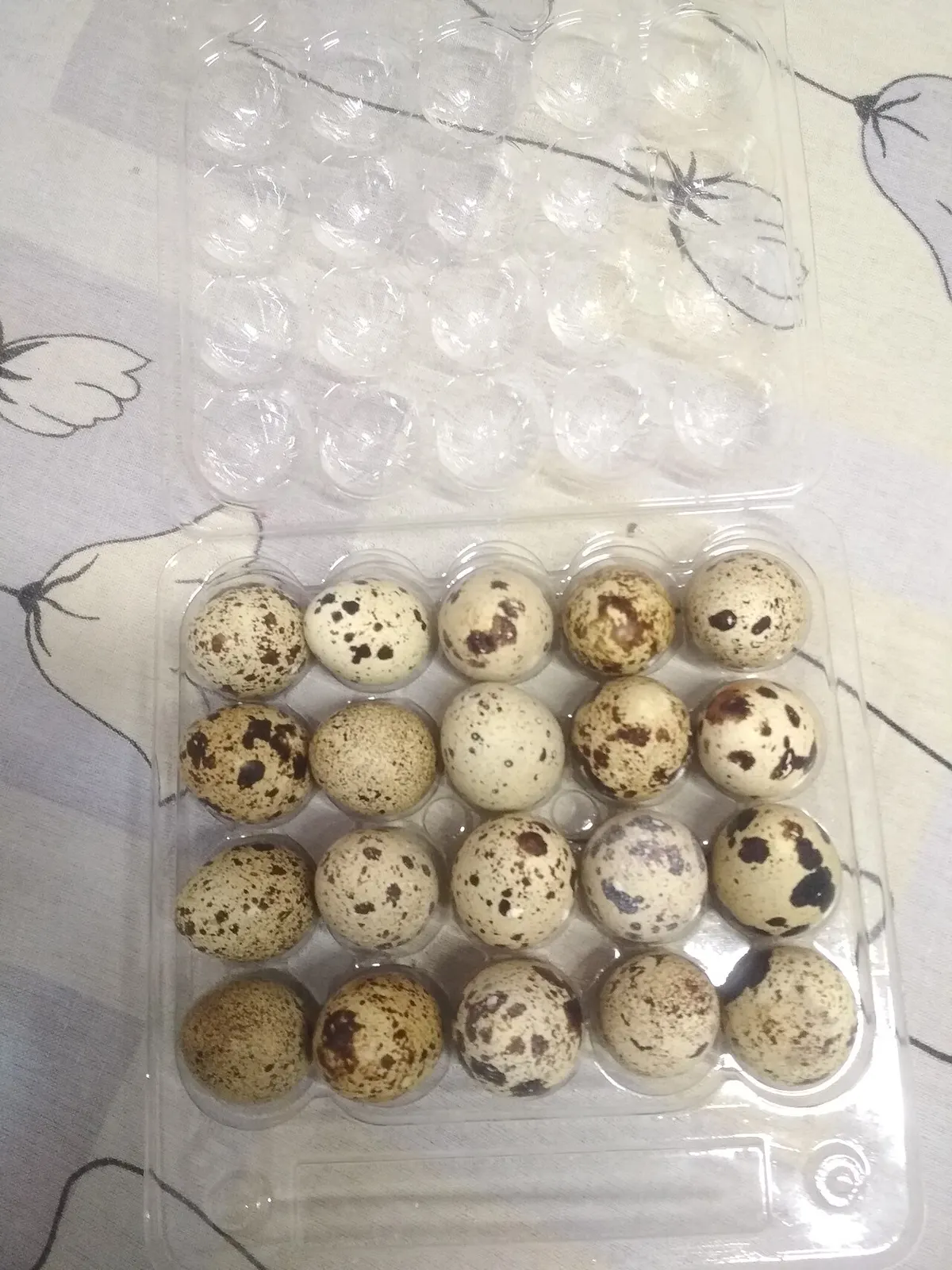
Because a dozen quail eggs takes up a fraction of the space a dozen chicken eggs would, they are easy to lose track of in a standard egg tray sized for something five times bigger. A dedicated small-format carton solves that and gives you a flat surface to write the collection date on, which is the single easiest way to stop guessing how old a carton is.
 Quail Egg Cartons, 12-Grid (100-Pack) Clear snap-lock plastic cartons sized for quail eggs specifically, so they sit snug instead of rolling around a chicken-sized tray. Stackable, and 100 of them covers a lot of collecting.
If you are producing more eggs than your household eats, the shelf life numbers above matter for a different reason: knowing how long you actually have before quality drops changes how you price and rotate stock. I get into that side of it in my cost of raising quail breakdown, and if you are cooking through a backlog rather than selling it, my guide to cracking, peeling, and cooking quail eggs covers the techniques that make a big batch less tedious.
The quick answers on quail egg storage
Unwashed quail eggs last 4 to 6 weeks refrigerated, and up to 8 weeks in some reports.
Unwashed quail eggs left at room temperature last about 1 to 3 weeks.
Washed quail eggs must be refrigerated and used within 7 to 10 days.
Do not freeze quail eggs whole in the shell, the shell cracks. Beaten or cooked quail eggs freeze for 2 to 3 months.
A floating egg in the float test is old, not automatically spoiled. Smell is the most reliable spoilage test.
Signs of a spoiled quail egg: sulfur smell, discolored or pink-tinted white, slimy texture, or a cracked shell.
Chicken eggs, by USDA guidance, last 3 to 5 weeks refrigerated and about 1 week once hard-boiled.