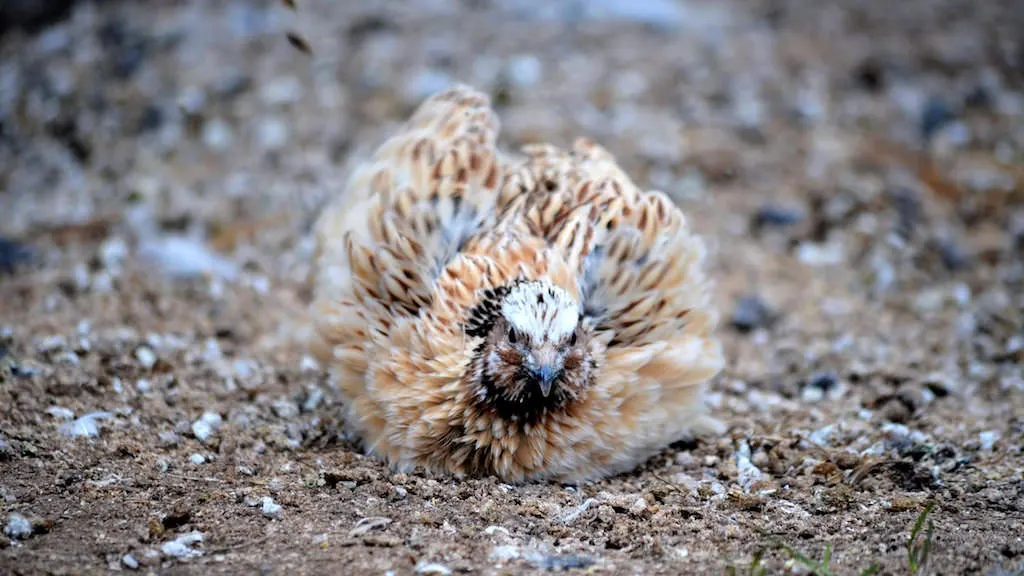
Someone asks this in almost every quail group within a week of getting their first chicks: how loud are quail, actually, and will my neighbor notice. I get it. Chickens have a reputation, and nobody wants to find out the hard way that quail do too. The short answer is that most quail are close to silent and the handful that aren’t are a specific, predictable problem you can plan around before it starts.
Do quail even make noise day to day?
Coturnix hens are quiet enough that most people don’t register them as background noise at all. They make soft contact chirps every minute or so, low and short, the kind of sound that disappears under a window fan or a neighbor’s lawn mower. After laying an egg, a hen will do a brief “egg song,” a few seconds of louder trilling, and that’s about as loud as a hen gets outside of an actual alarm call when something startles her or another bird gets aggressive.
None of that carries past a few feet in any normal yard. If your coturnix setup is all hens, which is the majority of backyard keepers, you are almost never the reason a neighbor complains.
How loud is a coturnix rooster’s crow?
This is the real question, because the males are where the noise actually lives. A coturnix crow is a short, raspy trill, one to two seconds long, nothing like the long, rolling blast a chicken rooster throws out. Across several long-running keeper threads on BackyardChickens, the consistent comparison is that a coturnix male runs somewhere around a quarter to half the volume of a chicken rooster at the same distance. A few keepers who’ve measured it with a consumer sound meter put a hen’s chirp around 40 to 50 decibels and a male’s crow around 60 to 70, against a chicken rooster commonly cited near 90. Those meter readings aren’t a controlled lab study, so treat them as a useful estimate rather than a hard number, but the gap they describe lines up with what every keeper I’ve read agrees on: quieter, shorter, and less of a performance.
Timing and social setup change how often you hear it. A settled male kept with hens typically crows once or twice right at first light and occasionally through the day, nothing constant. A lone male with no hens around crows far more, sometimes for minutes at a stretch, because he’s calling for a mate that isn’t there. Put two unfamiliar males in the same pen and you get the opposite problem: more crowing, more often, driven by the fight over who’s in charge rather than by anything seasonal.
What about wild quail, like Gambel’s or California quail?
It helps to know what a genuinely loud quail sounds like, because it isn’t the bird in your cage. Gambel’s quail and California quail, two closely related wild species common across the Southwest and California, use a far-carrying, repeated call, often written out as “chi-ca-GO,” to keep a covey together or claim territory across open desert or brush. Cornell’s Gambel’s Quail life history and its California Quail counterpart both describe that assembly call as one of the more prominent sounds in the habitats these birds live in, meant to be heard across a canyon or a stretch of chaparral. That’s a completely different design goal than anything a domestic coturnix needs, since a coturnix in a cage doesn’t have to shout to reassemble a covey that scattered across open ground. It’s a useful comparison point, not a reason to expect your backyard birds to sound anything like it.

What do neighbors actually hear?
Real accounts are more useful here than any decibel chart. One keeper running cages on three acres said a crowing male was audible almost everywhere on the property except across a creek, where the running water covered it. Another keeper with cages tucked behind a shed, deep in a large garden, could still hear the crow from inside the house, which tells you a solid barrier helps but doesn’t fully block it. A keeper running around thirty roosters in a garage reported that neighbors had no idea the birds existed unless they were told directly, which is the outcome you’re aiming for.
There are real complaint cases too, not just quiet successes. One keeper with three crowing males got a direct complaint from a neighbor. What worked for that pen was covering the cage fronts at night to block light and delay the first crow. What didn’t work was hanging a towel between two cages to stop the males from seeing and provoking each other, since they could still hear one another fine. A separate keeper noted that a 4:30 a.m. crow felt much louder than it was simply because everything else was silent at that hour. Timing changes how a sound lands as much as volume does.
How to keep a quail flock quieter
A few habits make a bigger difference than anything about the cage itself.
Run hens only if you don’t need fertile eggs. This is the single biggest lever, because only males crow, and a hens-only covey is close to silent year-round. If you do want to hatch, our male to female ratio guide breaks down why 1 male to 4 hens is the common working range, and fewer males means fewer crows competing to be heard.
Keep the flock stable. Reshuffling birds resets the pecking order, and a pen settling a new hierarchy crows more than one that’s been stable for weeks. Avoid adding or removing birds more often than you have to.
Cover cages or block light at dusk and dawn. Quail take their cue to call from light, not a clock, so a cover that delays first light by even thirty minutes can push the first crow later into a time neighbors are already awake and less bothered by it.
Think about placement before you think about soundproofing. A cage against a shared fence or directly under a bedroom window carries differently than one tucked behind a shed or garage wall. Solid-sided housing also dulls the sound more than an all-wire cage, simply because wire does nothing to block anything.
One thing in your favor either way: quail are quiet at night. They huddle on the cage floor instead of roosting the way chickens do, and outside of a predator scare, you won’t hear from them between dusk and first light.
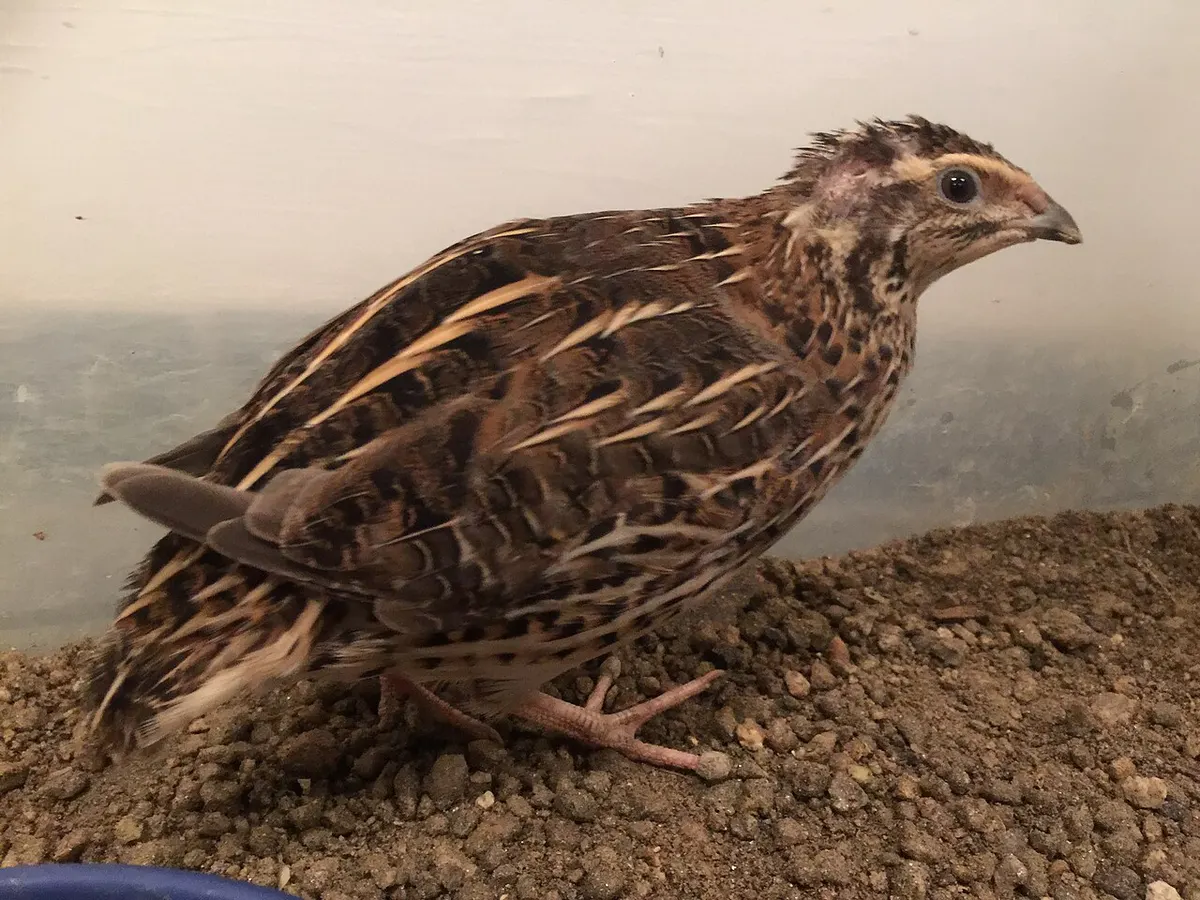
How coturnix compare to a chicken rooster, side by side
| Bird | Typical sound | Rough volume | When you’ll hear it |
|---|---|---|---|
| Coturnix hen | Soft contact chirp, brief egg song after laying | About 40 to 50 decibels | Scattered through the day, barely noticeable |
| Coturnix rooster (with hens) | Short, raspy 1 to 2 second trill | About 60 to 70 decibels | Once or twice at first light, occasionally during the day |
| Coturnix rooster (alone, or two rival males) | Same trill, repeated often | Same per-call volume, far more frequent | Can run for minutes at a stretch |
| Chicken rooster | Long, rolling crow | Commonly cited near 90 decibels | Anytime, often for the whole neighborhood to hear |
| Gambel’s or California quail (wild) | Repeated “chi-ca-go” assembly call | Built to carry across open brush or desert | Throughout the day in the wild, not relevant to a caged setup |
The quick answers
Coturnix hens run roughly 40 to 50 decibels, close to a soft conversation, and never crow.
A coturnix rooster’s crow runs roughly 60 to 70 decibels and lasts 1 to 2 seconds, compared to a chicken rooster commonly cited near 90 decibels.
A settled male with hens typically crows once or twice at first light; a lone male or a pen with rival males crows far more often.
Quail are silent at night because they huddle on the cage floor instead of roosting.
Covering cages at dusk and dawn, keeping the flock stable, and running hens only are the three most effective ways to cut noise.
Wild Gambel’s and California quail use a far-carrying “chi-ca-go” call built to reassemble a covey across open ground, a different job than anything a caged coturnix needs.
If you’re weighing quail against a louder bird before you commit to a spot in your yard, our guide to raising quail in the city and our balcony and patio setup guide both go deeper into placement and neighbor-proofing for tight spaces. And if this is one of several surprises you’re trying to get ahead of before your first chicks arrive, the full list of things I wish I knew before raising quail covers the rest of them in one place.
So, how loud are quail in the end. Quiet enough, almost all of the time, that the real answer is: quieter than you’re worried about, as long as you skip the extra roosters or plan around the one or two you keep.