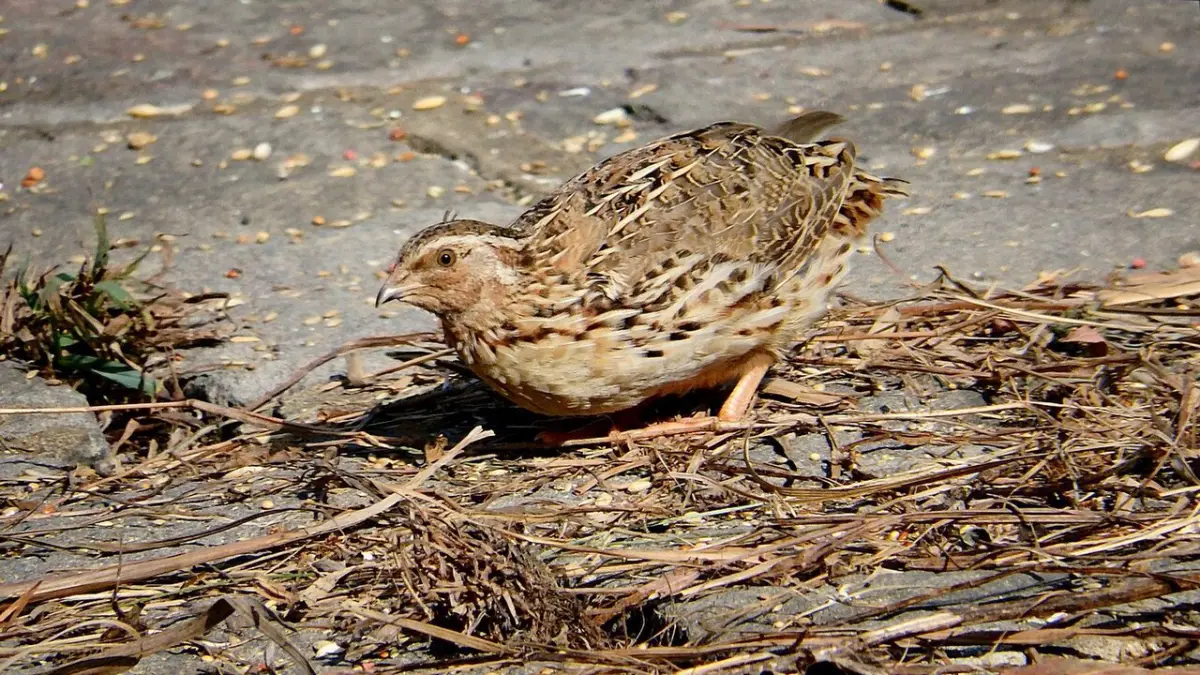
My quail journey started with a no. The city said no chickens, the HOA agreed, and I really wanted fresh eggs anyway. A guy at the feed store mentioned coturnix quail, and I went home and read everything I could find. Two years later I can tell you most of what I read was either wrong or written by someone who had clearly never scrubbed a waterer.
So here is the guide I wanted back then. Plain answers, real numbers, and the stuff nobody mentions.
Why coturnix and not some other bird
You want Coturnix japonica, the Japanese quail. Pet stores sometimes call them jumbo coturnix or pharaoh quail. Same bird, different marketing.
Here is how they stack up against chickens:
| Trait | Coturnix quail | Chickens |
|---|---|---|
| First egg | 6 to 8 weeks | 18 to 22 weeks |
| Eggs per year | About 300 | About 250 |
| Space per bird | 1 sq ft | 8 to 10 sq ft |
| Noise | Hens are nearly silent | Loud, even the hens |
| Legal in cities | Usually yes | Often banned |
The catch is size. It takes about five quail eggs to match one chicken egg. You get used to it fast, and honestly they taste a little richer.
Step 1: Check your local rules first
This takes ten minutes and can save you a world of trouble. Most city ordinances ban “poultry” and then list chickens, ducks, and geese. Quail often are not on the list because states usually classify them as game birds instead. That is the loophole that makes this whole hobby possible in town.
Search your city’s municipal code for the words “fowl,” “poultry,” and “game birds.” Then check whether your state wants a game bird permit. Some do, and they are usually cheap. Our Quail Law section breaks this down state by state.
Step 2: Decide how many birds
Simple math based on what you want:
- Eggs for the house: 4 to 6 hens keeps most families supplied.
- Eggs plus hatching your own: add one male for every 4 or 5 hens.
- Meat: start with 15 to 20 and learn the rhythm. They are table size at 8 weeks.
You do not need a male for eggs. Hens lay either way. I ran my first year with six hens and zero males and the neighbors never heard a thing.
Step 3: Housing
One square foot per bird. And here is the rule that sounds backwards: keep the cage under 12 inches tall, or go over 6 feet with a walk-in setup. Nothing in between. Startled quail launch straight up like feathered bottle rockets, and a mid-height ceiling is exactly the wrong thing to hit at speed.
Your three real options:
- A purpose-built quail cage. Wire floor, rollaway egg tray, droppings pan. This is what I run in the garage and cleanup takes five minutes a week.
- A converted rabbit hutch. The budget route for outdoors. Skin it in half-inch hardware cloth, because raccoons can reach through anything wider.
- A ground pen or aviary. The birds love it and it looks great. You will also hunt for eggs like it is Easter, every single day.
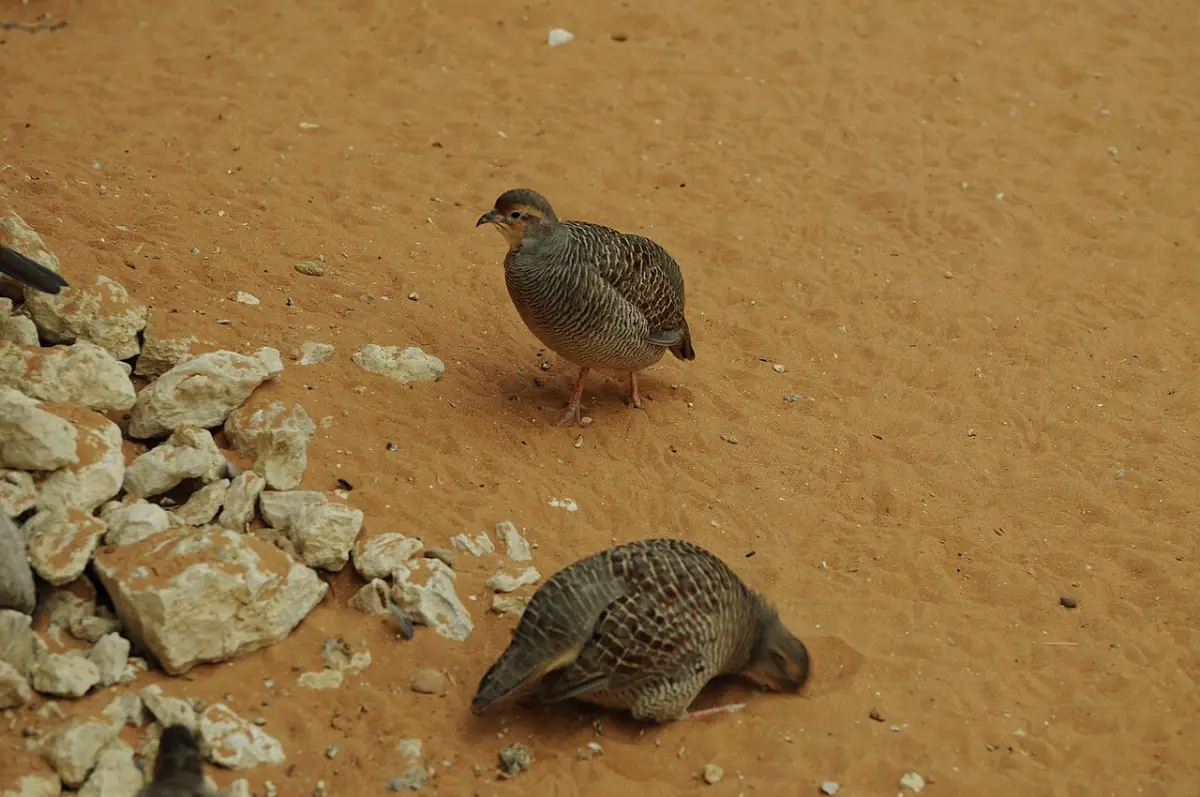
Step 4: Feed, where every beginner goes wrong
Quail need more protein than chickens. Regular chicken layer feed at 16 percent protein keeps them alive but quietly underperforming. My first flock lagged for a month before I figured this out.
What you actually want:
- Chicks, 0 to 6 weeks: game bird starter, 27 to 30 percent protein, ground fine.
- Adults: game bird layer or maintainer, 20 to 24 percent.
- Laying hens: a dish of crushed oyster shell on the side for calcium.
If your feed store only carries chicken feed, mix a 30 percent game bird starter with layer feed and you get close enough. The full protein math is in our feed guide.
Step 5: Water, sand, and the daily show
Use water cups or poultry nipples instead of open dishes. Chicks can drown in an inch of water, so drop marbles in the dish for the first week. Give the adults a pan of sand too. Quail dust bathe with total commitment, and it keeps mites away. It is also the single most entertaining thing they do.
The first eight weeks, week by week
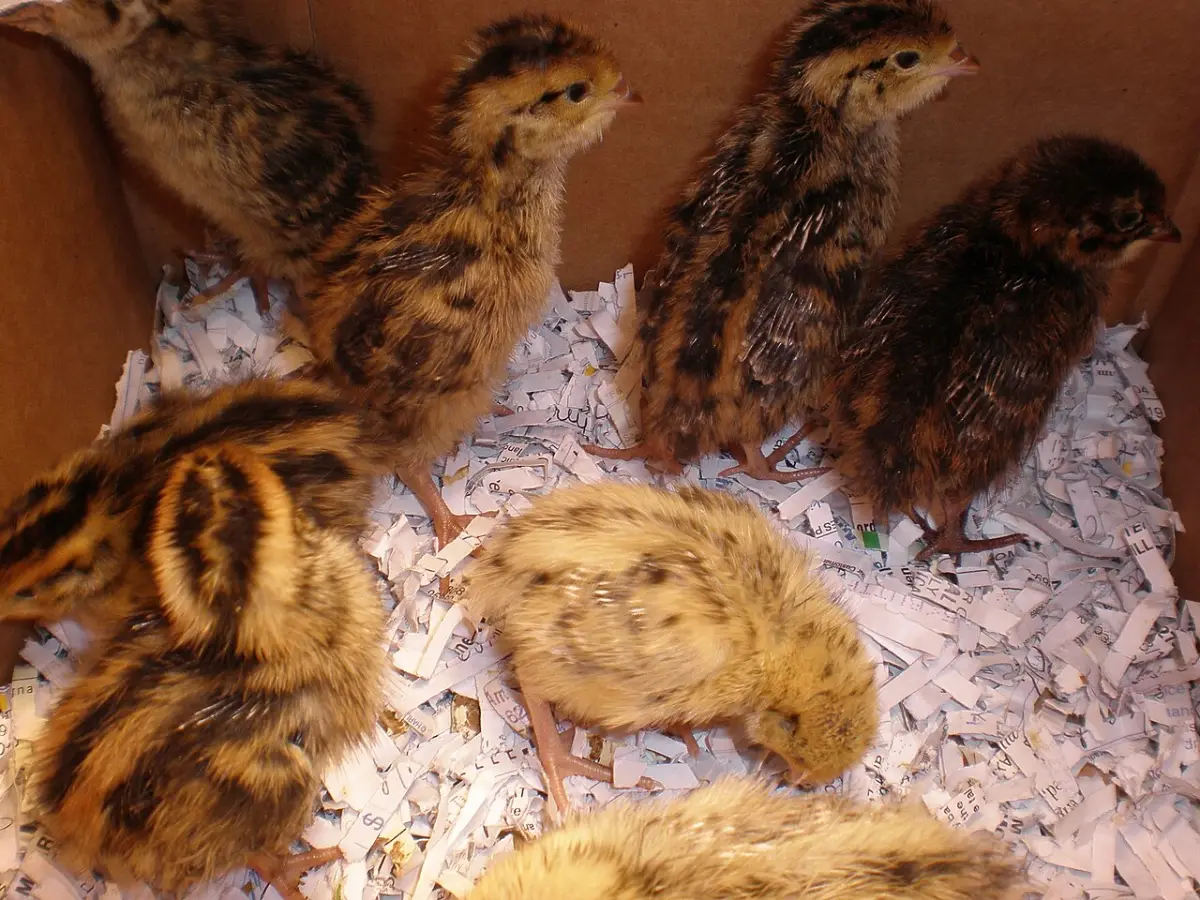
Weeks 1 to 3. Chicks live in the brooder at 95 degrees, dropping about 5 degrees a week. They are the size of bumblebees and think every gap is a door. Keep a lid on it. I use a RentACoop 12x12 heating plate instead of a heat lamp. Plates cannot start a fire at 2 a.m., and that is worth every penny of the price difference.
Weeks 3 to 6. Fully feathered, off heat by week 4 in mild weather, and moved to the grow-out cage. Males start a scratchy little crow around week 5. That is your cue to sort them if you want a quiet, hens-only covey.
Weeks 6 to 8. First eggs. Small and odd at first, then a steady near-daily rhythm. Expect 5 to 6 eggs per hen per week for the next year and a half.
What it actually costs
| Item | One-time | Monthly |
|---|---|---|
| Cage or hutch, 10 to 12 birds | $150 to $250 | |
| Feeder and waterer | $30 to $50 | |
| Brooder plate and thermometer | $50 to $70 | |
| Chicks, about $4 each x 10 | $30 to $50 | |
| Feed, 50 lb game bird | $15 to $20 | |
| Bedding and sand | $5 |
Call it $300 to $400 to start and roughly $25 a month to run. In exchange you get 25 to 30 eggs a week. My spreadsheet says the flock broke even in month nine, and that was with me overbuying gear.
Five mistakes I made so you don’t have to
- The tall cage. Lost my best hen to a ceiling strike before I learned the height rule.
- Chicken feed. A month of lousy laying until I switched to game bird feed.
- Too many males. Two males in one covey turned into a tiny ongoing war. One male per 4 or 5 hens, or none at all.
- Weak wire. Something reached through 1-inch wire on night three. Half-inch hardware cloth everywhere, no exceptions.
- Buying an incubator on day one. Start with live chicks. Hatch your own in year two, when you actually know what you are doing. When that itch hits, the Nurture Right 360 is the beginner incubator I recommend, and our Incubation section covers the rest.
The short version
Check your local code, buy six hens and a low cage, feed them like game birds and not chickens, and you will collect your first speckled egg in about eight weeks. Start with how many quail to get, then size the cage. Welcome to the covey.