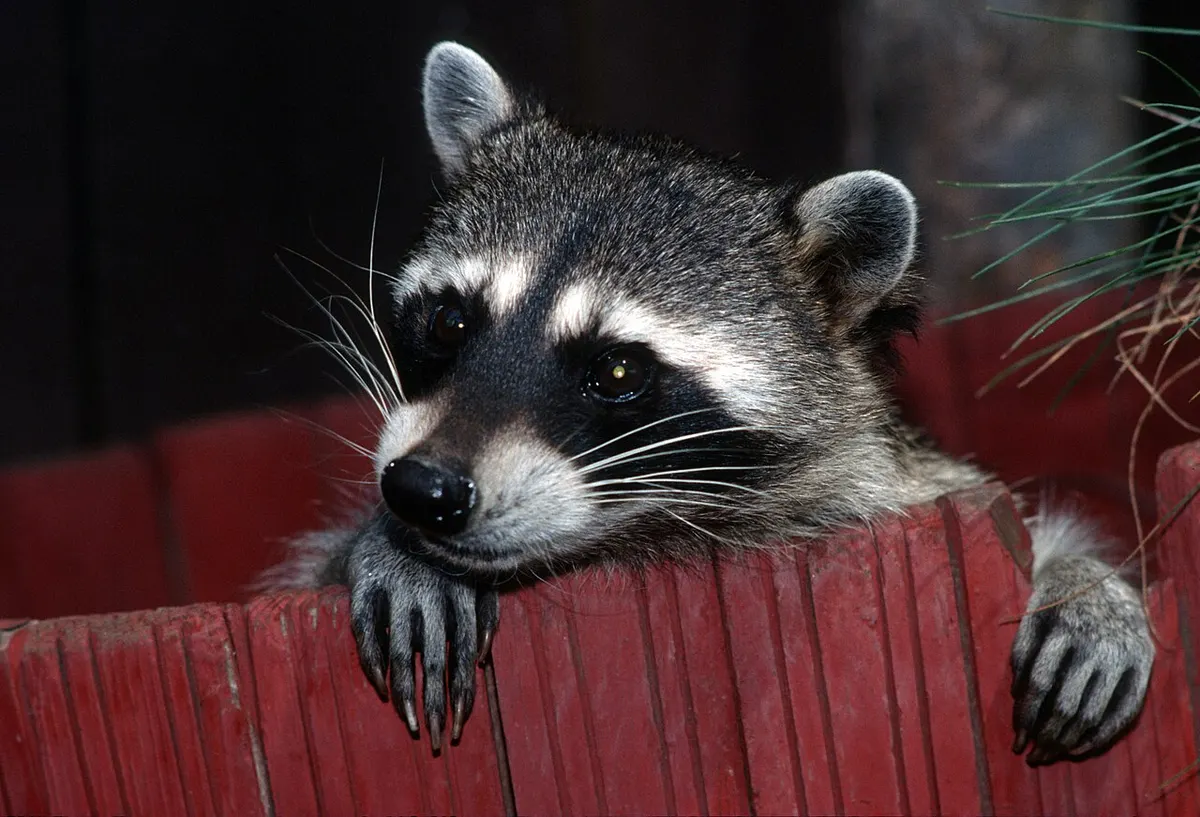
I lost four birds in one night before I understood any of this. Chicken wire, a simple slide latch, no apron. A raccoon worked the latch open in about the time it takes you to read this sentence, and I found out the next morning the hard way.
That thread on r/quails where everyone compares predator horror stories? I read the whole thing after that night. The pattern is always the same: people build a pen that looks secure, and it isn’t, because “secure” against a nosy dog is not the same thing as secure against a raccoon with hands, a snake that can flatten its skull to the width of a pencil, or a rat that can squeeze through a gap you’d swear was too small.
Here’s what actually works, in the order it matters.
Why chicken wire doesn’t stop predators
Chicken wire is for keeping chickens in. It was never built to keep anything out, and the name is misleading enough that it probably costs more quail flocks than any other single mistake.
The hexagonal openings in standard chicken wire run about 1 to 2 inches across, and the wire itself is thin and flexible. A raccoon can tear it open with its claws, a dog can rip through it, and anything over about an inch wide is already too loose to stop a weasel or a large rat. Snakes don’t even need to tear it. They go straight through the holes.
If your run is wrapped in chicken wire right now, that’s the first thing to fix, full stop. Everything else below assumes you’ve already swapped it for hardware cloth.
The mesh size that actually matters
Hardware cloth is the welded steel mesh that looks like a tighter, stiffer version of chicken wire, and the opening size is the whole game.
Half-inch hardware cloth stops raccoons and most dogs, but rats and small to mid-sized snakes can still work through a 1/2 inch gap. Quarter-inch mesh closes that gap too. Poultry-specific guides consistently recommend 1/4 inch for any run that has to exclude both rodents and snakes, which for quail means basically every run, since rats are also a direct predator of quail chicks and eggs.
Buy 19 gauge if you want the heaviest wire you can reasonably work with by hand, or 23 gauge if you want something a notch easier to cut and staple that’s still rated for coop use. Galvanized steel, not the cheaper vinyl-coated stuff, which looks fine until a raccoon starts working at a seam.
Attach it with washered screws, not staples. Staples back out under repeated predator pressure; a raccoon that gets a claw under a staple and pulls will eventually win. A screw and a fender washer every 6 to 8 inches around the frame holds.
The part almost nobody does: the buried apron
This is the single most skipped step, and it’s the reason a pen with “good” wire still gets dug into.
Predators that can’t get through your mesh will go under it instead. Raccoons, foxes, and dogs are all diggers, and they dig right at the base of the fence where the wire meets the ground, because that’s the obvious weak point.
The fix is a buried apron, also called a dig guard or L-footer. The University of Maryland Extension’s poultry predator guide recommends burying hardware cloth at least 1 foot deep along the base of the run, then bending it outward 90 degrees for another 8 to 10 inches before covering it back over with soil. Virginia Tech’s extension service gives a similar spec: 1 to 2 feet deep, with an apron extending out from the base.
The logic is simple once you see it: a digging predator starts at the fence line and tunnels down and under. If the wire follows the ground out and away from the fence instead of just straight down, the animal hits mesh before it hits open ground, no matter how deep it digs at that spot.
If you can’t trench it in (frozen ground, a pen on a deck, a rental you can’t dig up), lay the apron flat on top of the ground instead, extending it out 12 inches minimum, and pin it down hard with landscape staples every foot or so, then weigh it with pavers or cover it with mulch. An apron that isn’t pinned down gets lifted by the first raccoon that leans on an edge.
Latches: the part raccoons actually beat you on
Raccoons are smart enough and dexterous enough to open most of what people consider a “latch.” A simple hook-and-eye, a basic slide bolt, a gate that just swings shut and rests against a stop: a raccoon treats all of these as a puzzle it has all night to solve, and it usually solves them.
The fix doesn’t need to be complicated. It needs to require two separate motions to open, not one.
 Pet Cage Door Latch Spring Hook (20-pack). Heavy duty spring-loaded, galvanized steel, sold specifically as a chicken coop and wire-mesh-enclosure latch. The spring tension means a raccoon has to compress the hook and hold it while swinging the gate, two motions at once, which is exactly the kind of combined action that trips most of them up. Cheap enough to put one on every door and gate you own.
A carabiner-style screw-lock clip added to an existing slide bolt does the same job if you already have latches you don’t want to replace: the raccoon can usually move the bolt, but it can’t also unscrew a carabiner at the same time. Whatever you use, a padlock is the only latch that’s effectively raccoon-proof on its own, and for a door you open twice a day that’s often more hassle than it’s worth. Two-step spring or clip latches get you most of the way there without the keys.
Snakes: a different kind of threat
Adult quail aren’t usually in danger from snakes, but eggs and chicks are, and a snake doesn’t need a hole nearly as big as you’d think to get to them. A snake’s skull is the limiting factor, not its body, and a rat snake or kingsnake can flatten and fit through gaps that look solid to the eye.
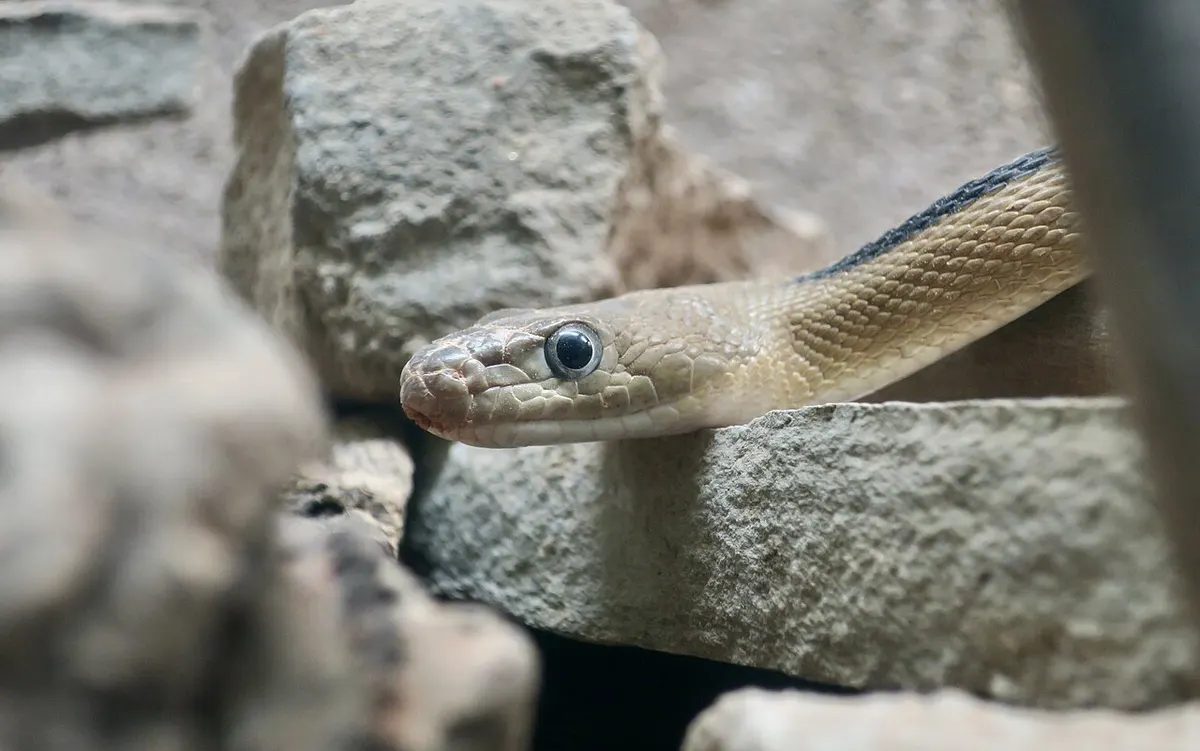
The species that show up most often around coops and runs in the US are rat snakes (sometimes called chicken snakes), kingsnakes, milk snakes, and in the west, bullsnakes, which bluff like rattlesnakes but aren’t venomous. None of them are a threat to you. All of them are a threat to a clutch of eggs or a brooder full of chicks.
Quarter-inch hardware cloth excludes essentially all of them. Beyond the mesh, two habits cut your risk further: collect eggs daily instead of letting them sit, and keep brush, leaf piles, and woodpiles away from the pen, since that’s where snakes shelter and hunt rodents, and rodents are what draws snakes toward your coop in the first place.
Hawks and the one predator you’re not allowed to just remove
Hawks and other raptors are federally protected under the Migratory Bird Treaty Act, so unlike a rat or even a raccoon, the only legal option is keeping them out, not dealing with them after the fact.
A fully roofed or netted run solves this outright. If your run is open-top and a full roof isn’t practical, stringing thin wire or fishing line across the open top in a grid, a few feet apart, disrupts a hawk’s approach enough that most won’t commit to a dive into a space that looks that cluttered from above. Raptors want a clean sightline and a clean exit; take both away and they generally move on to easier targets.
Cats
Outdoor and feral cats will take a chick whole and go for the breast meat on an adult bird if they can reach one. There’s no cat-specific hardware here: the same 1/4 inch mesh, buried apron, and two-step latch that stop everything else also stop cats. The only addition is covering any gap a cat-sized animal could squeeze through at the top of an open run, since cats climb and jump in a way rats and raccoons mostly don’t.
Hardware cloth: what to actually buy
 Amagabeli 1/4" Hardware Cloth, 36" x 50'. 23 gauge galvanized steel mesh, sold specifically for poultry and small-predator exclusion. Thirty-six inches of width covers a standard run wall with room to fold into an apron at the base; fifty feet is enough to wrap a mid-sized pen and still have material left for the floor if you're going fully enclosed.
Comparing your exclusion options
| Barrier | Stops raccoons | Stops rats | Stops snakes | Stops digging |
|---|---|---|---|---|
| Chicken wire | No | No | No | No |
| 1/2” hardware cloth | Yes | No | Partial | No (without apron) |
| 1/4” hardware cloth | Yes | Yes | Yes | No (without apron) |
| 1/4” hardware cloth + buried apron | Yes | Yes | Yes | Yes |
| Roofed run or overhead wire grid | Adds hawk protection | N/A | N/A | N/A |
Putting it together on a real pen
If I were building from scratch today: 1/4 inch, 19 or 23 gauge galvanized hardware cloth on every wall and the top, screwed and washered rather than stapled, with a 1-foot-deep buried apron bent outward 8 to 10 inches at the base of every section that touches the ground. Two-step spring latches on every door. If the run has any open top at all, either a full roof panel or a wire/fishing-line grid overhead. Eggs collected daily, and the brush pile that was sitting against the back of my old pen moved somewhere else entirely.
None of this is expensive compared to what a bad night costs you. One roll of hardware cloth and a pack of latches is twenty or thirty dollars. Four quail is a lot more than that.
The quick answers
- Chicken wire has 1 to 2 inch openings and is too thin and flexible to stop raccoons, dogs, or snakes. It only keeps birds in.
- Use 1/4 inch galvanized hardware cloth (19 or 23 gauge) on walls and the top of any quail run; 1/2 inch stops raccoons but not rats or small snakes.
- Attach hardware cloth with washered screws every 6 to 8 inches, not staples, which pull loose under predator pressure.
- Bury an apron of hardware cloth at least 1 foot deep, bent outward 8 to 10 inches, around the base of the pen to stop digging predators (University of Maryland and Virginia Tech extension specs).
- A latch needs at least two separate motions to open to slow down a raccoon; simple hook-and-eye or single slide bolts are not enough on their own.
- Rat snakes, kingsnakes, milk snakes, and bullsnakes target eggs and chicks, not adult quail, and are excluded by 1/4 inch mesh.
- Hawks are federally protected; the only legal control is exclusion with a roofed run or an overhead wire/fishing-line grid, not removal.
- Cats are stopped by the same mesh, apron, and latch setup as everything else; add top coverage since cats climb and jump.
If you haven’t read it yet, start with 15 things I wish I knew before raising quail for the rest of the lessons this one came out of. For the housing decision underneath all of this, see wire cages vs ground pens and how to build a quail aviary, both of which affect how hard predator-proofing actually is depending on which layout you pick.