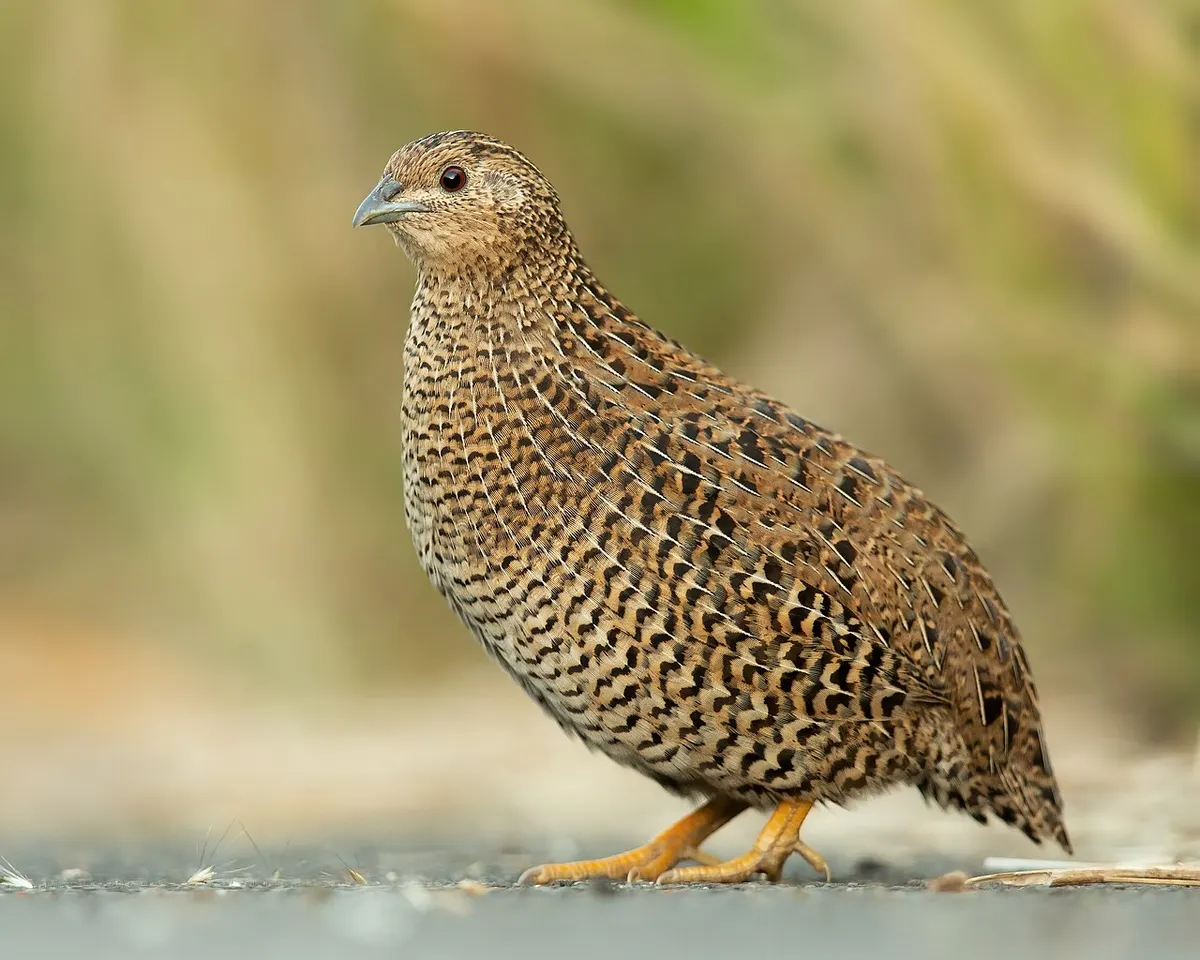
The first time I pulled a sick-looking hen out of my cage to check her over, her feathers felt wrong. Greasy, almost matted, nothing like the clean dry feel of the rest of the flock. She wasn’t sick. She was the one bird in that cage who’d been getting pushed off the dust bath pan by two bossier hens, and three weeks without one had done exactly what you’d expect. A quail dust bath isn’t a nice-to-have accessory like a swing or a mirror. It’s maintenance equipment, and skipping it shows up on the bird within a few weeks.
Quail dust bathe because it’s the only way they have to manage the oil on their own feathers. There’s no water bath that does this job for them, not even a shallow dish they’ll wade into on a hot day. Dust is the tool, and if you don’t give them any, they don’t get a substitute. They just go without.
Why do quail need a dust bath instead of water?
Quail, like most birds, constantly produce a thin layer of oil and lipid residue on their feathers, partly from their own skin and partly from preening. In small amounts that oil is useful, it helps waterproof feathers and keep them flexible. In excess it’s the opposite of healthy: feathers mat together, lose their insulating structure, and stop shedding dirt the way they should.
Dust bathing is how birds strip that excess off. Working dry, fine material down through the feathers to the skin absorbs the oil and old skin debris, and then the bird shakes most of it back out. Research on quail specifically found that dusting keeps “an optimum amount of oil on the feathers,” and when researchers prevented quail from dust bathing, their feathers went oily and matted within weeks, almost exactly what I saw on that one hen. Parasite control rides along with that same behavior. A bird thoroughly coated in fine dust is a worse environment for mites and lice to hold onto, even though the science on exactly how much that alone stops an infestation is still thinner than the feather-maintenance research.
What actually happens if you skip it
The short list, roughly in the order I’ve seen it show up: feathers start looking dull, greasy, or clumped instead of lying flat and clean. Birds scratch and peck at themselves more, which is usually the first visible sign something’s off before you can see why. If mites or lice are already present anywhere in your setup, a flock without a reliable dust bath has a much harder time keeping a light infestation from becoming a bad one, since dusting is the main tool the birds have to fight it themselves. And less obviously, quail that can’t dust bathe get bored and restless in a way that often turns into bickering or feather picking between birds, the same crowding stress covered in my cage size guide.
None of this is dramatic or fast. It’s a slow decline that’s easy to miss because nothing about it looks like an emergency, until you pick a bird up and feel feathers that should be dry and resting flat instead stuck together.
What’s the best sand for a quail dust bath?
Play sand, the fine, soft stuff sold for sandboxes, is not actually the best choice, even though it’s what most people reach for first. It’s milled so fine that it clumps the moment any moisture gets into it, and quail kick up a surprising amount of fine dust out of it that’s more of a respiratory nuisance than a benefit.
Washed construction sand or all-purpose sand, the coarser grade sold at any hardware store for landscaping and masonry, works better. It’s coarse enough to stay loose and workable even after birds have been in it a while, it doesn’t clump as readily, and it produces less airborne fine dust per session. A 50 pound bag is cheap and covers several dust pans with plenty left over for refills.
 CountryMax All Purpose Sand, 50 lb. This is the coarse, washed sand I use as the base for every dust pan in my setup. It stays loose longer than play sand and doesn't clump the first time a bird tracks in a damp foot.
Skip beach sand if you can’t confirm it’s free of salt, and skip anything scented or labeled for cat litter. Both introduce chemicals or fragrance oils that have no business touching a bird’s feathers or airway.
How big should a quail dust bath container be?
This is where most of the advice out there is wrong for quail specifically, because nearly everything written about dust baths is sized for chickens. A chicken-scale dust bath recipe calls for an 18 to 24 inch wide container with 6 to 8 inches of depth. Quail don’t need anything close to that. A bird the size of a coturnix quail can work a full dust bath into a much smaller footprint, and an oversized, deep container just wastes sand and takes up cage space you don’t have.
For a small group of four to six quail, a shallow pan roughly 12 by 12 inches with 1 to 1.5 inches of sand is plenty. The low depth matters as much as the width, quail don’t dig down into sand the way a chicken scratches a bowl, they mostly throw it up and over themselves while lying in it, so a deep reservoir of sand below where they’re actually working it does nothing for them. I rotate one pan between two cages rather than keeping a bath in every cage permanently, which keeps the sand fresher and cuts down on how much gets kicked out onto the floor in any one spot.
 Zeus & Ruta Adjustable Dust Bath Tub, 25 inch. This one's adjustable down to a smaller footprint than most chicken-marketed dust tubs, which makes it one of the few off-the-shelf options that doesn't waste half its sand on empty space for a quail-sized flock.
A plastic storage bin lid, a cat litter pan, or a shallow wooden box all work just as well if you’d rather not buy a dedicated product. The container matters far less than getting the sand depth and the placement right.
Should you add diatomaceous earth to a quail dust bath?
Food-grade diatomaceous earth, sold for exactly this use, is one of the few additives worth considering, but it comes with real caveats people skip over. DE works by drying out the exoskeletons of small parasites like mites and lice, and extension entomologists have found it a credible treatment for moderate mite infestations when it’s reapplied over several days rather than used once and forgotten. It is not a cure for a severe infestation on its own, and it does essentially nothing for internal parasites or disease, both covered in more depth in my guide to common quail diseases.
The caveat that matters most: DE is a fine powder, and breathing in any fine powder repeatedly is a respiratory irritant, for you and for the birds. Keep it to a light sprinkle mixed through the sand rather than a thick top layer, and only use food-grade DE with low crystalline silica content, never the pool-filter grade sold for swimming pool filtration, which is a different product with a genuinely higher health risk. A mix of roughly nine parts sand to one part food-grade DE gives the birds access to it without turning every bath into a dust cloud.
 Harris Diatomaceous Earth, Food Grade, 5 lb. The duster that comes in the bag makes it easy to sprinkle a thin, even layer through the sand instead of dumping in a clump that just sits in one spot.
What’s the right sand and additive mix?
| Mix | What it’s good for | Downsides |
|---|---|---|
| Plain washed construction sand, no additives | Most flocks with no current parasite problem; lowest dust, cheapest to maintain | Does nothing extra against mites if an infestation is already established |
| Sand plus a light sprinkle of food-grade DE | Flocks with a mild mite or lice issue, or as ongoing light prevention | Adds some fine dust, needs food-grade DE specifically, needs reapplication over days for real effect |
| Sand plus wood ash from untreated wood | A free, traditional additive some keepers swear by for oil absorption | Messier, inconsistent quality depending on the wood burned, no real evidence it beats plain sand alone |
| Fine play sand, any additive | Nothing. Avoid as a base layer | Clumps fast, highest airborne dust, least durable between refills |
Where should the dust bath sit, and how often does it need attention?
Keep it dry. That’s most of the job. A dust bath sitting in a damp corner of a cage or an outdoor pen turns into mud within a day or two of any rain or spilled water, and wet sand doesn’t work for dusting at all, it just cakes onto feathers. Indoors, that mostly means keeping it away from waterers and any drip line. Outdoors, it means a covered spot, under an overhang or a simple lean-to roof, the same kind of shelter bobwhite quail seek out naturally. Virginia’s Department of Wildlife Resources notes that wild bobwhite often tuck their dust bowls under the raised side of a downed log specifically to stay dry in wet weather, which is the same instinct you’re accommodating with a roof over a pan.
Stir the sand every few days to break up any clumping and redistribute the DE if you’re using it, and do a full refill every one to two weeks for an actively used pan, sooner if it visibly fouls from droppings landing in it. A dust bath that’s also collecting droppings isn’t doing its job and needs to move or get a cover.
When can quail chicks start using a dust bath?
Hold off until chicks are fully feathered out, generally around 4 to 6 weeks old, the same age range most keepers move birds from a brooder into a grow-out cage. Before that, down-covered chicks chill easily and a cold, damp dust pan is more risk than benefit. Once feathers are in, introduce a shallow pan with less than an inch of sand, since young birds working a full-depth adult bath can kick up more dust relative to their size than they’re ready to handle. I’ve never had a chick drown or choke in sand, despite that being a common worry online, but I do keep young birds’ first few baths shallow just to be cautious while they’re learning what to do with it.
The quick answers
- Quail dust bathe to strip excess oil from their feathers, not to get clean the way a water bath would.
- Skipping a dust bath for a few weeks shows up as oily, matted feathers and increases how badly a mite or lice issue can take hold.
- Washed construction or all-purpose sand works better than fine play sand, which clumps and creates more airborne dust.
- A 12 by 12 inch pan with 1 to 1.5 inches of sand is enough for four to six adult quail, far smaller than chicken-sized dust bath recommendations.
- Food-grade diatomaceous earth, mixed roughly nine parts sand to one part DE, helps against mites and lice but needs several days of reapplication for a real effect.
- Never use pool-filter grade diatomaceous earth. It has a much higher crystalline silica content and is a genuine respiratory risk.
- Keep the dust bath dry and covered. Wet sand cakes instead of dusting and stops working entirely.
- Hold off on chick access to a dust bath until birds are fully feathered, around 4 to 6 weeks old, and start shallow.
Dust bathing is one piece of a bigger feather and skin health picture. If bedding choice is also part of what’s driving smell or moisture into your cages, my full bedding comparison for quail covers sand, pine, and hemp side by side for the cage floor itself, separate from what goes in the dust pan.
Sources: Virginia Department of Wildlife Resources, bobwhite quail dusting behavior, Oregon State University Extension Service, chicken mite control