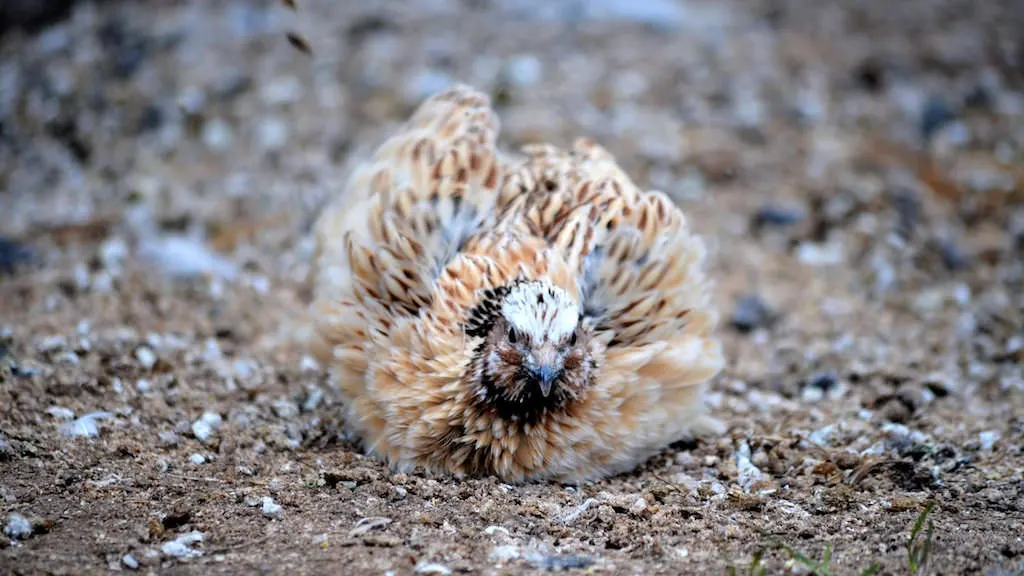
I got a message last spring from someone whose quail had “both eyes closed and blood coming down its face.” That’s not an exaggeration people make up for attention. It’s scalping, and if you’ve landed here because you just found blood on a bird’s head, I want to get you to the fix fast and then explain the why.
Scalping isn’t just pecking order
Every covey sorts out a pecking order, and some head feather wear is normal, especially on hens that get mounted a lot. Scalping is different. It’s targeted, repeated pecking at the top and back of the skull that strips feathers down to bare, often bleeding skin. Left alone, it escalates: once skin shows, the red color itself triggers more pecking from flock mates, and a bird that was just losing feathers an hour ago can end up with an eye injury or worse by the end of the day.
Why quail peck each other
Scalping has a handful of well-documented triggers, and most coops have more than one stacked on top of each other:
Too many males. This is the single biggest driver. Male Coturnix compete hard for mating access, and that competition gets taken out on hens’ heads and each other’s heads. Research on Japanese quail breeding groups found that multi-male pens cause enough injury that they’re not recommended for welfare reasons at all; single-male groups at a ratio of 1 male to 8 or 12 females had the lowest injury rates, and mixed groups should never go past 1 male to 4 females. If you’re running anything tighter than that, roughly a third of your scalping problem is solved by fixing the ratio alone. (See our male-to-female ratio guide for how to count out a mixed pen.)
Not enough space. Crowding is the second biggest factor. When birds can’t get away from a pushy male or a dominant hen, pecking is the only outlet left. If you’re not sure your cage is actually sized right for your bird count, our cage size guide has the real square-inch numbers, not just “give them room.”
Boredom and a flat, featureless cage. Bare wire floor, nothing to forage in, nothing to climb over. Quail that have zero stimulation redirect that energy into each other.
Light. Bright, constant light increases aggression and feed competition. Quail kept under harsh light around the clock scalp more than birds on a normal day and night cycle with some dim periods.
One bully bird. Sometimes it really is just one individual, not a systemic problem. A single aggressive male or dominant hen can scalp an entire pen’s worth of birds while everyone else behaves normally with each other.
Blood itself. This is the ugly feedback loop. Once skin is visible and red, it draws more pecking, from birds that weren’t aggressive before. That’s why first aid matters just as much as fixing the root cause.
Fixing it today
- Separate the injured bird. A wire divider panel or a spare tote with air holes works fine as a hospital pen. Keep it out of sight of the main cage if you can; birds will still peck through wire at an injured neighbor.
- Treat the wound. A blue-colored antiseptic wound spray made for poultry (look for one with gentian violet and sodium propionate) does two things at once: disinfects, and dyes the skin blue so it stops reading as “red and peckable” to the rest of the flock once the bird goes back in. A poultry wound spray is worth keeping on hand before you need it, not after.
- Identify the aggressor. Watch for 10 minutes. If one bird is doing all the chasing and pecking, pull that bird, not the victim, once the victim has healed enough to return.
- Fix the ratio and the space before you reintroduce anyone. Reintroducing an injured bird into the same crowded, male-heavy pen that hurt it the first time just restarts the cycle.
When it’s not fixable by the above
If you’ve corrected the ratio, given more space, and it’s still one specific bird terrorizing the pen, that bird needs to be permanently removed, either rehomed alone or culled, depending on your setup and what you’re raising for. Commercial operations sometimes use beak blunting (mechanically rounding the beak tip) as a last-resort fix for chronic flock-wide aggression, but for a backyard setup of a dozen or two birds, fixing ratio and space almost always solves it without needing to touch anyone’s beak.
Scalping vs. normal pecking order vs. feather pecking
| What it looks like | Main cause | Fix | |
|---|---|---|---|
| Normal pecking order | Occasional peck, no blood, no bare skin | Establishing who’s dominant | Usually nothing; monitor |
| Feather pecking | Patchy feather loss on back or wings, skin intact | Boredom, overcrowding, monotony | Add forage material, more space |
| Scalping | Bare, bloody skin on head/skull, often repeated on the same bird | Too many males, crowding, bright light, blood feedback loop | Separate, treat wound, fix ratio and space before reintroducing |
The quick answers
Scalping is pecking that strips feathers and skin from the head, not routine pecking-order behavior. A safe sex ratio in a mixed pen is no more than 1 male to 4 females, and single-male groups at 1 to 8 or 1 to 12 show the least aggression. Blood on a wound attracts more pecking from flock mates, so a blue antiseptic wound spray that disguises the red color is standard first aid. Separate an injured bird immediately and reintroduce it in dim light once healed. If one specific bird is the aggressor after you’ve fixed ratio and space, that bird needs to be rehomed or removed, not the victim.
This is one of nine things people wish they’d known before starting with quail; see the full rundown for the other eight, including noise, predator-proofing, and that infamous poop-ball-on-the-feet problem.
Sources: sex ratio and injury data from quail breeding research summarized by the FAO AGRIS database; cannibalism and pecking control methods from Purdue University Extension (AS-651-W).
Next up in the queue: wire cages vs. ground pens for quail.