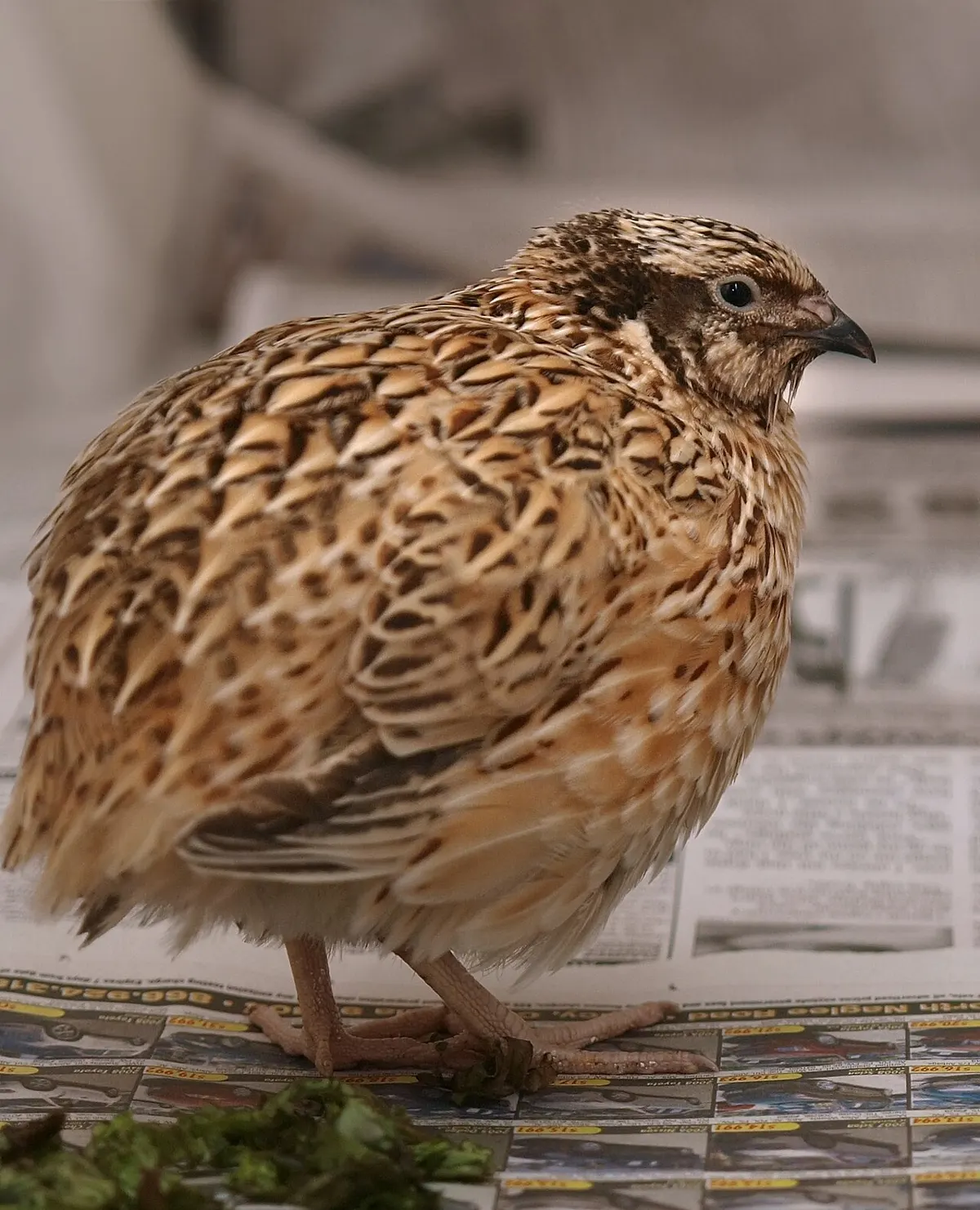
The first time one of my hens popcorned straight into the lid of a brooder, I heard it before I saw it. A flat thud, like someone dropped a marshmallow on a table, and then a quail standing very still with her head tilted wrong for about ten seconds. She was fine. Not every bird is, and that thud is the single most common reason new keepers end up posting a “found my quail dead with no marks on her” thread.
Quail popcorning, the sudden vertical jump a startled bird makes straight up off the ground, is normal quail behavior. The problem isn’t the jump. It’s that most of us house quail in exactly the height range where that jump turns into a collision instead of a harmless hop.
What popcorning actually is
Coturnix and other quail have almost no instinct to run from danger. Their first response to a sudden noise, a shadow, or a hand reaching into the cage is to explode straight up, as hard and fast as their legs and wings can manage. In an open field this gets a bird a few feet off the ground and clear of whatever scared it. In a cage, it gets a bird’s skull into a ceiling that wasn’t there a second ago.
This is sometimes called a flush reflex rather than popcorning when it happens in response to a real threat, but it’s the same movement. Quail do a calmer, bouncier version of it when they’re just excited, often right after you add new bedding or scatter treats, and that version rarely causes injury because it’s not thrown with full panic force. The dangerous version is the one triggered by fear: a dog barking outside, a door slamming, a hawk’s shadow crossing the run.
Why cage height is the whole problem
I’ve read through a lot of the backyard chicken and quail forums while sorting out my own setup, and the advice splits into two camps that sound like they contradict each other. They don’t. They’re solving the same problem from opposite directions.
Camp one says go low. Keepers running cages in roughly the 10 to 15 inch range report few or no head injuries, even with birds that popcorn regularly. One longtime keeper described losing birds in 16 inch pens to flushing injuries but having no losses at all once they dropped down closer to 10 inches. The logic is simple: a quail needs distance to build up speed before its head meets a surface, and a ceiling that low doesn’t give it room to accelerate. The bird flaps, hits the lid almost immediately, and the impact is closer to bumping a low shelf than being launched into a wall.
Camp two says go tall. The European Food Safety Authority’s scientific opinion on quail welfare puts a number on this from the other direction, recommending a minimum enclosure height of about 150 cm, roughly five feet, specifically so a startled bird can jump and fly upward without hitting anything. Backyard aviary keepers running 6 to 7 foot ground pens report the same outcome: plenty of vertical room means the bird runs out of upward momentum and starts coming back down before it ever reaches the top.
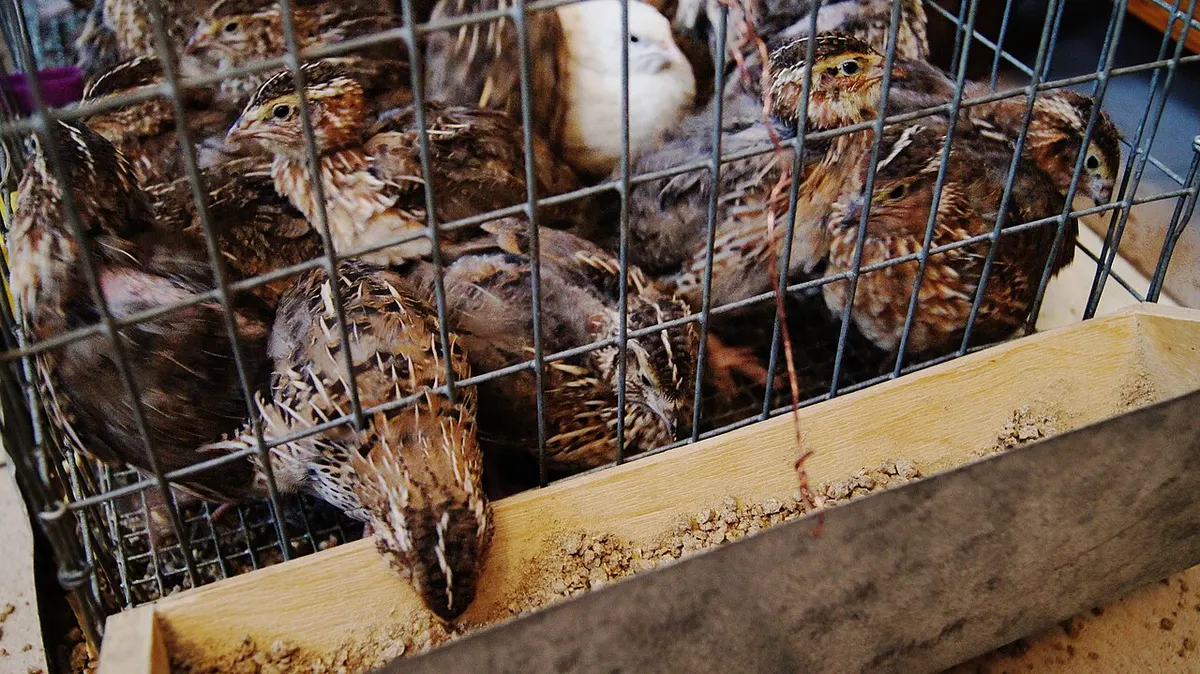
What both camps agree on, whether they say it directly or not, is that the dangerous zone sits in the middle. Somewhere around 16 to 30 inches is tall enough to let a panicked bird build real speed, but not tall enough to let that speed bleed off before impact. That’s the exact height of a huge number of off-the-shelf rabbit hutches and stacked quail cages, which is probably why so many injury reports trace back to exactly that kind of setup.
Comparing the height ranges
| Ceiling height | What happens when a bird flushes | Trade-offs |
|---|---|---|
| Under 15 inches | Bird flaps and hits the ceiling almost immediately, with little speed built up. Reported as low-injury by multiple long-term keepers. | Cramped for a tall bird to stretch, and you lose the ability to add tall feeders or dust boxes. |
| 16 to 30 inches | The danger zone. Enough room to accelerate, not enough to slow down before impact. | This is the height of most stock rabbit hutches and stacked cages, so it’s easy to end up here by accident. |
| 5 to 7 feet (aviary-style) | Bird runs out of upward momentum before reaching the top, matching the EFSA’s recommended minimum. | Needs floor space and a roof structure, and isn’t practical for an indoor cage setup. |
If you’re building new, my cage size guide covers the floor space math in detail, and I’d now add height to that checklist before you commit to a design: pick a number under 15 inches or over 5 feet, and treat anything in between as something to fix before birds move in.
If you already own a mid-height cage
Most of us aren’t tearing out a cage we already bought. If yours falls in that 16 to 30 inch zone, you have two practical fixes, and they work better combined than alone.
Soften the ceiling itself. A layer of closed-cell foam on the underside of the lid turns a hard impact into a cushioned one. One keeper reported no serious injuries after adding roughly 4 cm, a bit over an inch and a half, of foam padding to a cage that had previously caused head injuries. You don’t need anything fancy. Adhesive-backed foam sheet meant for soundproofing or anti-vibration padding sticks to a wire or plastic lid without tools.
 MXCELL Adhesive-Backed Foam Sheet, 1/2" Thick. Closed-cell neoprene foam with a peel-and-stick back, sold in roughly 12 by 59 inch sheets. Trim it to the inside dimensions of a cage lid with scissors and press it on; no staples, which matters if you're renting or just don't want to put holes in a cage you might resell.
Hang netting a few inches below the hard ceiling. This is a trick from button quail keepers dealing with the same problem in taller hutches: stretch soft bird or garden netting taut, a couple of inches under the actual lid, so a flushing bird meets give instead of a hard stop. The netting flexes, slows the bird before it reaches the solid surface above, and doesn’t trap feet or heads the way a loose net would. Pull it drum-tight when you install it; a sagging net is worse than no net, since a bird can get a leg or neck tangled in slack mesh.
 Black Poultry Netting, 1" Square Mesh, 50' x 50'. Lightweight woven mesh sold for garden and coop protection, cut to size for a cage ceiling liner. The 1 inch mesh is small enough to stop a head or wing from pushing through while still flexing on impact.
Either fix helps. Foam plus netting, used together, gets a mid-height cage most of the way to as-safe-as-it’s-going-to-get without rebuilding anything.
Cutting down on the startle in the first place
Padding treats the symptom. Reducing how often a bird flushes at all treats the cause, and it costs nothing.
Quail that have somewhere to duck under, even a cardboard box lid propped on two bricks or a clump of fake greenery zip-tied to the wire, flush less often because they have an option besides straight up. Cover the cage with a sheet or towel at night and during loud weather like thunderstorms or fireworks; several keepers who struggled with repeated head injuries said covering the cage, more than any other single change, cut down on panicked flushing. Keep the cage somewhere dogs, kids, and sudden foot traffic don’t pass close by, and approach slowly with a word of warning rather than reaching in fast. None of this eliminates popcorning. It’s a reflex, not a choice the bird is making. But fewer triggers means fewer chances for that reflex to end badly.
If you’re setting up a taller outdoor aviary instead of a cage, my aviary setup guide covers roof height and structure in more detail, including how to avoid overhead support beams in the bird’s flight path, since those cause the same kind of injury as a low cage ceiling even in a tall structure.
When it isn’t popcorning at all
A bird that goes still and wobbly for a few seconds after an obvious bonk, then shakes it off and goes back to normal, is almost always fine. Watch for the cases that aren’t: a neck held at a visible angle that doesn’t correct itself, one eye that won’t open, or a bird that can’t stand or walk normally afterward. Those need an avian vet, not a wait-and-see approach, because a cracked vertebra or serious concussion doesn’t always show on the outside in the first hour.
It’s also worth ruling out other causes before you blame the ceiling for a death with no visible injury. Heart failure, egg binding, and sudden heat stress can all kill a bird that looks completely fine one moment and is gone the next, with nothing that looks like trauma. My breakdown of why quail die suddenly walks through how to tell those apart from a flush injury.
The quick answers
Here’s the short version if you’re skimming:
Popcorning is a startle reflex, a vertical jump a quail makes when frightened, not a sign of illness on its own.
The most dangerous cage height is roughly 16 to 30 inches, tall enough for a bird to build speed but not tall enough for it to slow down before hitting the top.
Cages under about 15 inches and aviaries at 5 to 7 feet or taller are both reported as low-injury, since neither gives a panicked bird room to reach full speed and then stop short.
The EFSA’s quail welfare opinion recommends a minimum enclosure height of about 150 cm, roughly five feet, specifically to let a startled bird jump and fly without hitting an overhead surface.
For a cage you can’t resize, closed-cell foam padding on the ceiling and taut soft netting hung a few inches below the lid both reduce injury risk, and work best used together.
Giving quail cover to duck under and covering the cage during loud or stressful periods cuts down on how often they flush in the first place.
A bird that stays wobbly, can’t stand, or holds its neck crooked after a collision needs an avian vet, not a wait-and-see approach.
Things to know before you start keeping quail at all, including the other surprises that catch new keepers off guard, are in my beginner reality-check guide.
For background on quail welfare research and official enclosure recommendations, see the EFSA scientific opinion on the welfare of quail on farm and Texas A&M AgriLife’s home quail production guide.