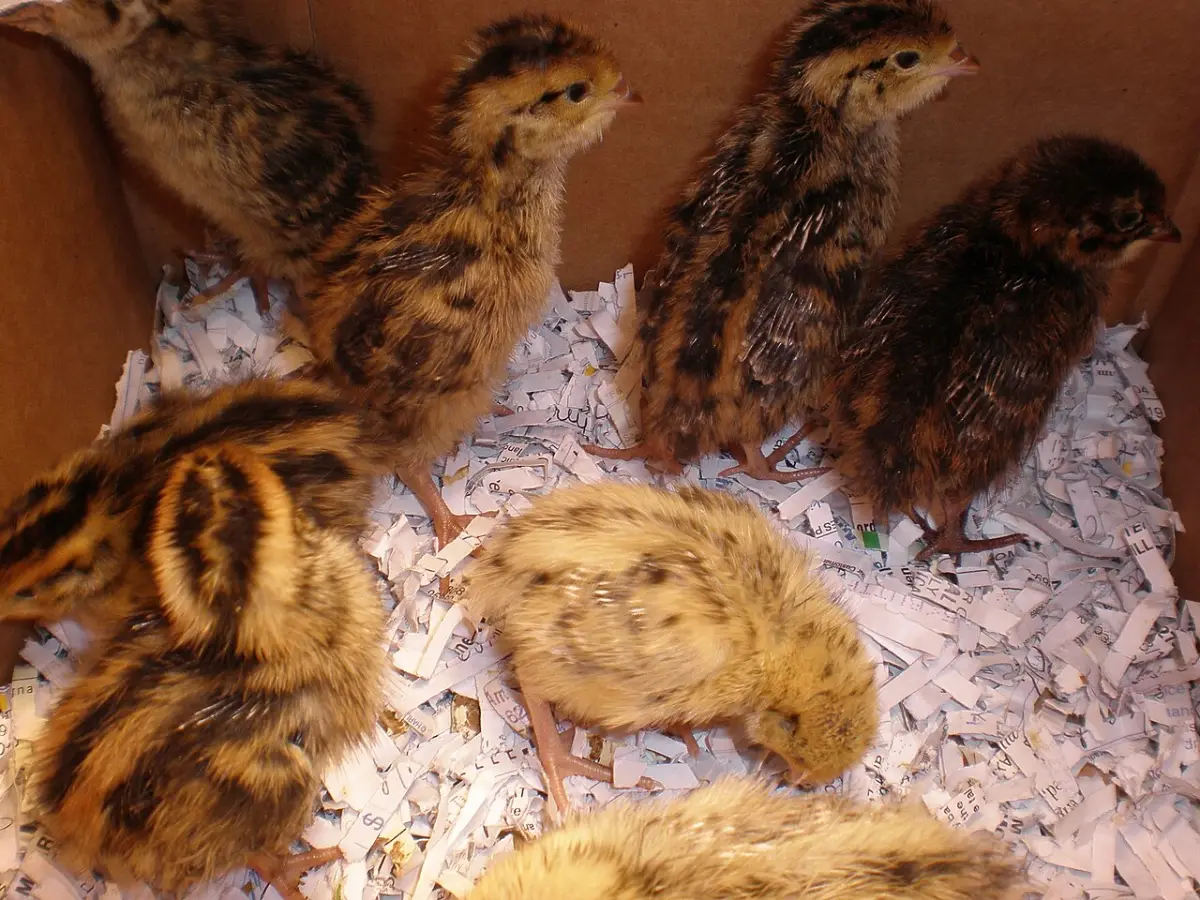
My first quail brooder setup was a cardboard box, a 250 watt heat lamp clipped to a chair, and a lot of praying. It worked, mostly, but I lost three chicks to a temperature swing overnight and spent a week convinced my house was going to burn down. Six hatches later I’ve landed on a setup that’s boring in the best way: predictable temperatures, no open bulbs, and chicks that actually sleep instead of piling into a corner.
This is what I run now, why I switched off heat lamps for most of it, and where a heat lamp still earns its spot.
Heat Plate or Heat Lamp: The First Call in Any Quail Brooder Setup
For day-old coturnix chicks indoors, I’d start with a heat plate. A radiant heating plate for chicks runs somewhere around 15 to 22 watts and its surface tops out near 125°F, so a chick that wanders under it gets warmed from above the way a hen’s body would warm it, not baked by an open bulb. A 250 watt heat lamp, by comparison, draws more than ten times the power and has a glass bulb sitting a few inches from bedding that will absolutely catch fire if the clamp slips.
The catch with plates: they’re calibrated for chicken chicks, and quail chicks are smaller and hatch a few degrees “hotter blooded” in their heat demand for the first few days. Some keepers find the lowest leg height on a plate still runs a touch warm for day-old coturnix, which is why I keep a lamp in reserve for unheated spaces (a garage, a shed, a drafty spare room) where ambient temperature drops well below the 50 to 60°F a plate assumes as a baseline.
| Heat Plate | Heat Lamp | |
|---|---|---|
| Typical wattage | 15 to 22 watts | 250 watts |
| Surface/bulb temp | About 125°F (adjustable height) | Bulb surface exceeds 200°F |
| Fire risk | Low, no open element | Higher, especially if it falls into bedding |
| Best for | Indoor rooms 50°F and up | Unheated garages, sheds, cold snaps |
| Running cost (30 days, 24/7) | Roughly $1 to $2 | Roughly $15 to $20 |
| Chick behavior under it | Comes and goes like a hen | Must stay under the radius or gets cold fast |
The Quail Brooder Temperature Schedule, Week by Week
Mississippi State University Extension recommends starting the brooder around 90 to 95°F measured about an inch above the litter at the outer edge, then dropping it roughly 5°F a week. Most quail keepers run the zone directly under the heat source a little hotter than that, closer to 95 to 100°F for days one through seven, because it gives the chicks a true hot spot to retreat to and a cooler zone to explore. Either way, the pattern is the same:
- Week 1: 95 to 100°F directly under the heat source
- Week 2: 90 to 95°F
- Week 3: 85 to 90°F
- Week 4: 80 to 85°F
- Week 5: 75 to 80°F, most chicks are fully feathered and heat becomes optional
Quail feather out faster than chicken chicks, so plenty of coturnix are off supplemental heat entirely by week 4 if the room stays above 65°F. Don’t trust the thermometer over the birds, though. Chicks piled in a tight heap under the heat source are cold. Chicks scattered against the far walls of the brooder, panting, or avoiding the heat source altogether are too hot. Chicks spread out evenly, eating, drinking, and taking naps in random spots are exactly where you want them.
Picking a Brooder Container
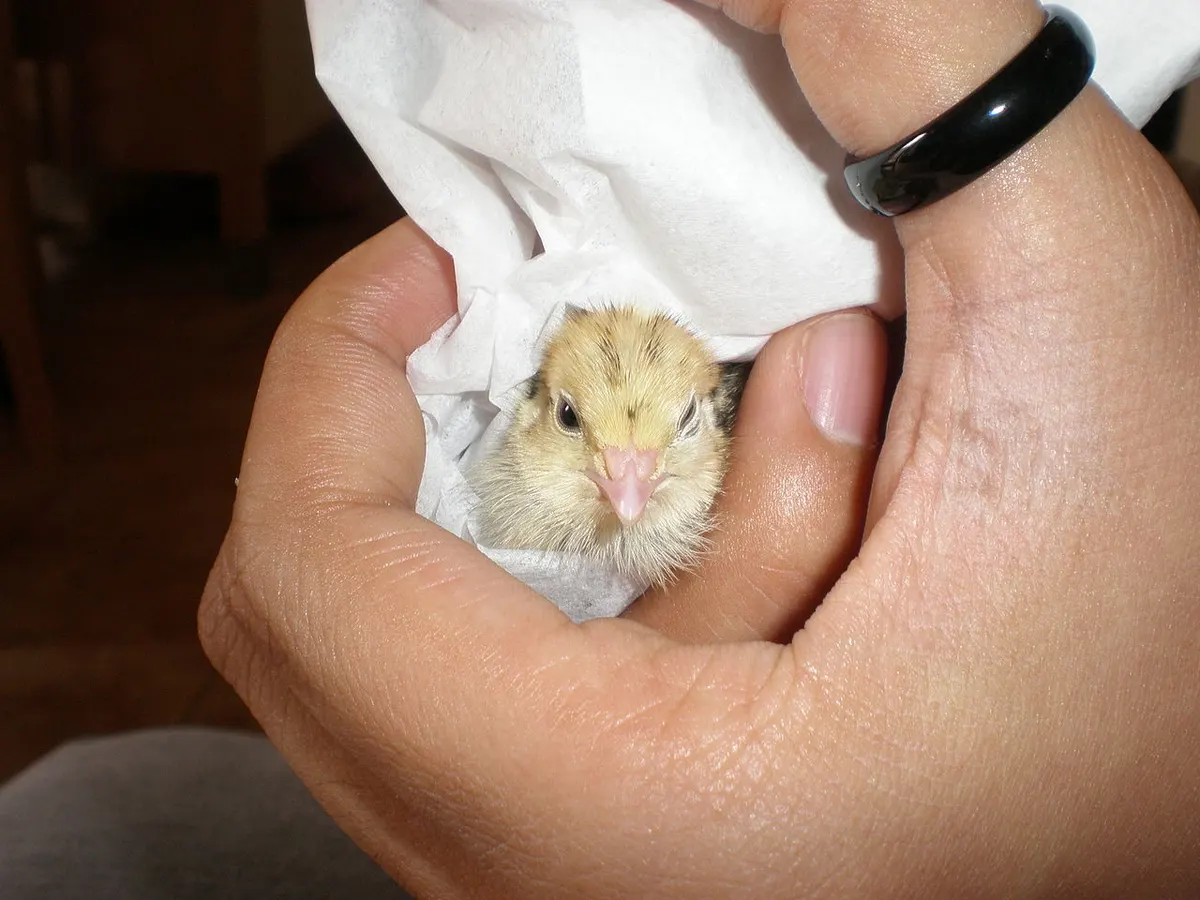
Skip anything with wire or mesh sides. Quail chicks are small enough at hatch to squeeze through gaps a chicken chick couldn’t, and a wire-sided brooder also lets in drafts that fight against whatever heat source you’re running. A solid-sided plastic storage tote is what I use and what most people who’ve raised more than one batch land on eventually: cheap, easy to bleach clean between hatches, and the solid walls act as a windbreak on their own.
The lid matters more than people expect. Quail can hop and flutter out of an open-top container by around a week old, sometimes sooner, so I run a hardware cloth lid or a mesh screen clipped over the top from day one rather than waiting until the first escapee shows up on the kitchen floor. For sizing the brooder itself and, later, the grow-out cage they move into after feathering, our quail cage size guide has the square-inch-per-bird numbers I use.
Bedding for the First Weeks
Paper towels for the first three to five days, full stop. It’s not glamorous, but it lets you actually see droppings (a fast way to catch coccidiosis or a feed problem early), it doesn’t get eaten the way loose shavings sometimes do by chicks still figuring out what’s food, and you can swap it two or three times a day without much effort. After the first week, once the chicks aren’t mistaking bedding for feed anymore, I switch to pine shavings. If you want the full breakdown of shavings versus sand versus hemp for both brooder and grow-out stages, that’s covered in our bedding comparison.
Gear That Actually Earns a Spot in the Brooder
I’ve cycled through a lot of brooder gear that ended up in a drawer. These three are still in rotation.
 RentACoop 12x12" Adjustable Heating Plate. This is the plate I run for most hatches. Adjustable legs let you lower it as chicks grow so they're still brushing the underside, and the included anti-roost cone keeps birds from perching on top and fouling it. Rated for up to 20 chicks, though I'd call that generous for quail packed in tight; plan on splitting a large hatch across two plates or a bigger footprint.
 Little Giant 10.5" Brooder Reflector Lamp. My cold-space backup. Ceramic socket rated for a 250 watt bulb, double wire bulb guard so a shifting chick can't press against hot glass, and a clamp with a ball joint that actually holds position instead of drooping over a few hours. I only run this in the unheated side of the garage where a plate alone can't keep up.
Common Brooder Mistakes
The other mistakes I see repeated in quail groups: brooders with no lid past day five (chicks fly out sooner than people expect), heat lamps clamped to something that isn’t rated to hold the weight and slips overnight, and switching to pine shavings too early, before chicks have learned what’s feed and what isn’t.
The Quick Answers
- Day-old quail chicks need 95 to 100°F directly under the heat source, dropping about 5°F per week.
- Most coturnix are off supplemental heat by 4 to 5 weeks old if the room stays above 65°F.
- A brooder heat plate runs about 15 to 22 watts; a heat lamp runs about 250 watts.
- Use paper towel bedding for the first 3 to 5 days, then switch to pine shavings.
- Brooder containers should have solid sides, not wire, to block drafts and prevent tiny chicks from escaping.
- Cover the brooder by day one; quail chicks can flutter or hop out within about a week.
If you’re setting this up before eggs have even gone into the incubator, back up to our guides on incubating quail eggs and candling quail eggs so you know roughly how many chicks you’re building a brooder for. Getting the quail brooder setup right in the first week is the difference between a hatch that thrives and one you’re troubleshooting for a month.
Sources: Mississippi State University Extension, Quail Brooding Temperatures, Mississippi State University Extension, Brooding Chickens and Quail